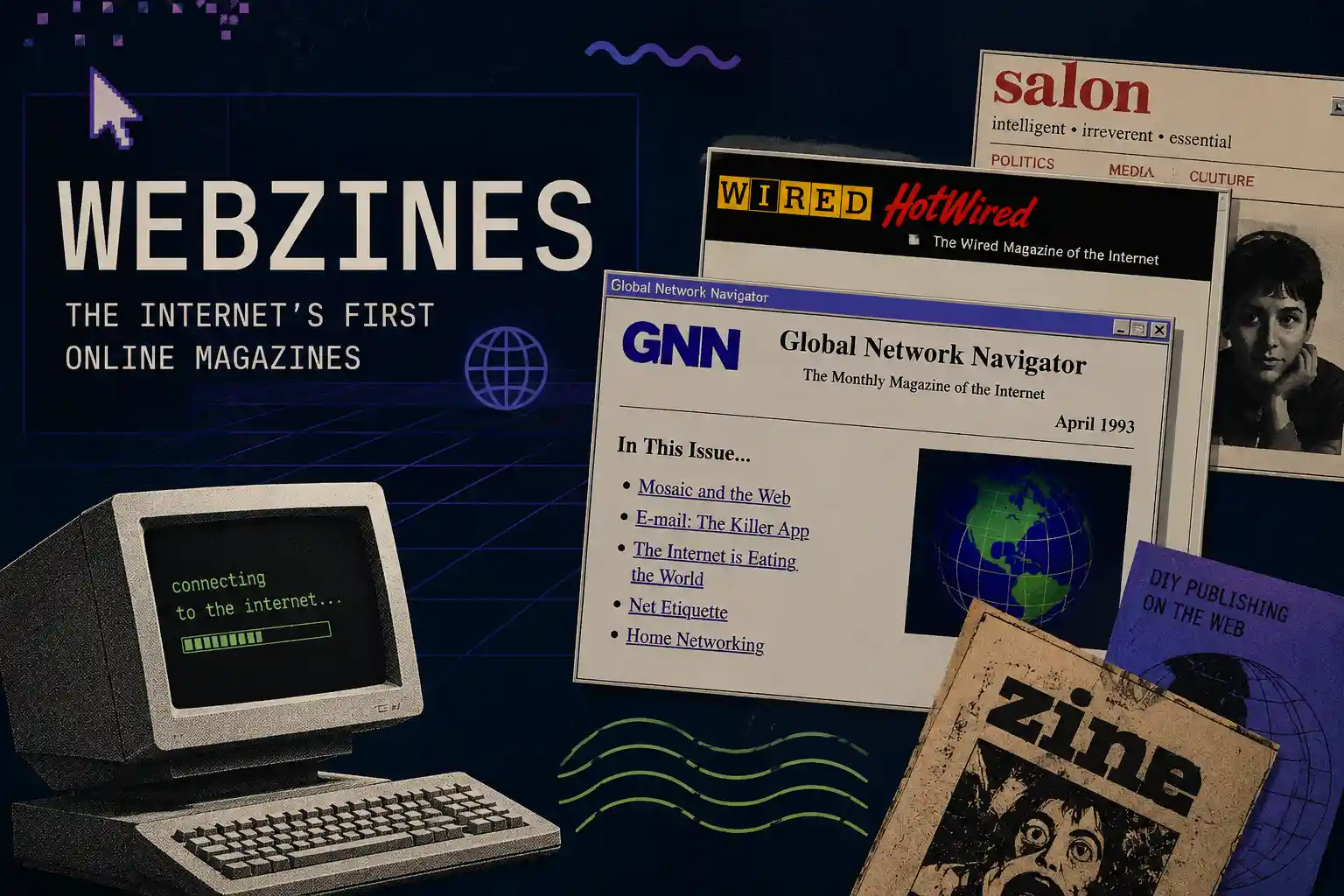
Webzines: The DIY Online Magazines That Shaped the Early Web
Webzines are self-published online magazines built and edited like magazines rather than traditional-style blogs, and interestingly, they existed years before blogging became the internet’s default way to publish. Inspired by photocopied print zines, they brought the same DIY spirit to the early internet, using the World Wide Web (WWW) to publish collections of art, writings, reviews, and commentary instead of dozens of posts. The word combines web and zine, reflecting its roots in independent print publishing, and it’s one of the earliest forms of web publishing. It helps to shape the internet culture before blogs and modern publishing platforms became normal.
Table of Contents
What Makes a Webzine Different From a Blog
Most people think a webzine is an online magazine and don’t say anything about how a webzine actually works or why the format matters. A webzine is edited, not just posted. Someone curates a lineup, an issue, or a themed batch of content, the way print magazines are assembled. A blog is usually written and posted by one person without the editorial layer.
In the early to mid-1990s, web publishing lacked a standard format. Site owners were inventing the rules as they went, and the webzine role was borrowed directly from early internet print culture: photocopied punk and science fiction fanzines that circulated by mail years before anyone had a browser. That same logic went from here also, and it carried straight into the first generation of HTML Websites.
Where Webzines Actually Came From
When the accessibility of the World Wide Web became publicly usable in 1991, web history moved fast from there. In 1993, O’Reilly & Associates launched Global Network Navigator, which was the first commercial web publication magazine rather than a document archive. Later, it used graphics, editorial sections, and clickable ads long before that was standard practice.
Print magazines noticed the web quickly. The computer trade publication Datamation became one of the first print magazines to provide a magazine that could live without the print counterpart at all. In 1994, HotWired introduced banner advertising and built one of the first real staff dedicated to internet publishing. Later, Salon launched with long-form journalism and cultural essays. Salon eventually reached millions of monthly readers.
In simple terms:
| Year | Event |
| 1980s | DIY print zines inspire independent publishing culture. |
| 1993 | Global Network Navigator (GNN) launches as one of the first magazine-style websites. |
| 1994 | HotWired introduces one of the first professionally designed web publications and popularizes banner advertising. |
| 1995 | Salon, Suck.com, and Feed Magazine help define the webzine era. |
| Late 1990s | Blogging software begins replacing many independent webzines. |
| 2000s | Thousands of webzines stop publishing or move to blog platforms. |
| Today | The webzine spirit continues through the Indie Web, Neocities, and hand-built personal websites. |
Webzines vs. Digital Magazines vs. E-zines
An e-zine can refer to any electronic version of a zine, including ones distributed through email lists, Usenet, or bulletin board systems before the web era. A webzine specifically means one built to live on the web, with adding hyperlinks and web design as part of its delivery method. Digital magazines today usually refer to online versions of print magazines that often include PDF replicas and even subscription apps, which is a different animal from the scrappy, independently run online magazines this article is describing.
| Feature | Webzines | Blogs | Digital Magazines |
| Publishing style | Issue based | Chronological posts | Issue based |
| Editorial process | Curated by an editor | Individual publishing | Professional editorial team |
| Writers | One or multiple contributors | Usually one author | Multiple staff writers |
| Design | Custom HTML layouts | Blog templates | Commercial magazine layouts |
| Updates | Published in issues | Continuous updates | Regular editions |
| Purpose | Independent publishing | Personal or business publishing | Commercial publishing |
Why Webzines Faded, and Where the Instinct Went
Blogging software arrived in the late 1990s, and it changed web publishing completely. Anyone could post without learning to hand-code pages and maintain an editorial structure, and the blogosphere that followed absorbed much of the audience and energy that webzines had built. While researching this topic, I noticed that many of the webzines are currently shut down, and some have stopped updating. Even Suck.com officially shut down in 2018.
The editorial instinct never fully disappeared. It resurfaced inside personal websites built by hobbyists on Neocities. It shows up in the wider indie web and handmade web movements, where creative websites get built one page at a time by people who want full ownership rather than just a template-based code. Web archives now store thousands of these old webzines, letting anyone experience them right now.
The content system also changed expectations. Instead of waiting months for a curated issue, reader prefers to daily updates, comments, and RSS subscriptions. Publishing became faster, but much of the editorial identity that defined webzines slowly disappeared.
Notable Webzines Worth Knowing
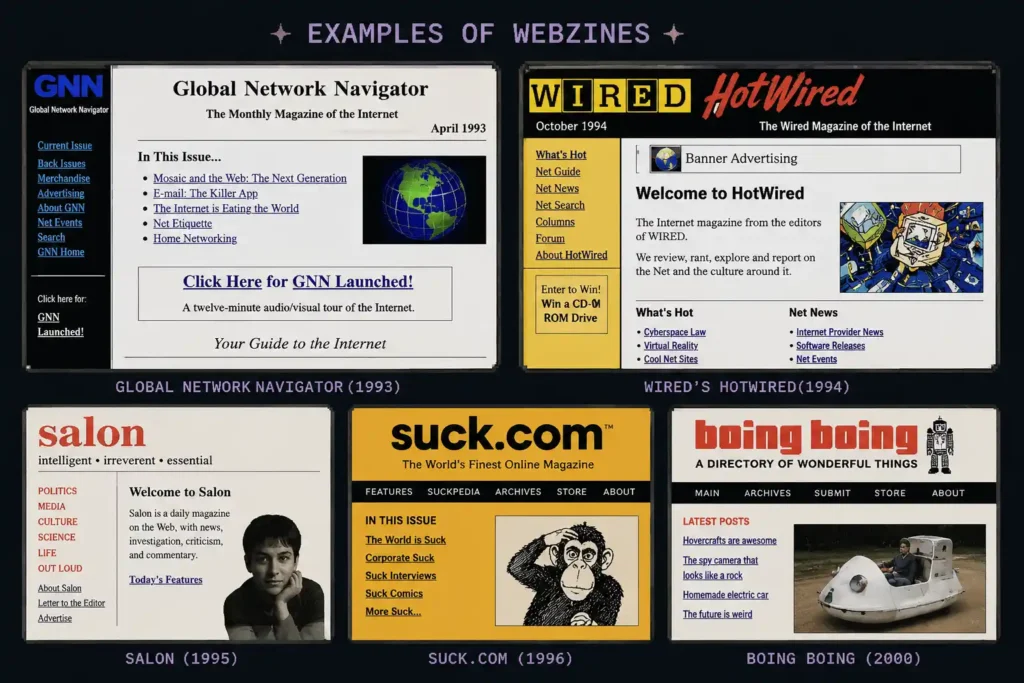
- Global Network Navigator (1993): the first commercial web publication built to look and feel like a magazine.
- HotWired (1994): Wired’s web arm, and the site that introduced banner advertising.
- Salon (1995): long-form cultural journalism that grew into a major online news outlet.
- Suck.com (1995 to 2001): daily satirical commentary whose single-column, link-dense format prefigured blog design years before blogs existed.
- Feed Magazine (1995): thoughtful, long-form writing on media and technology aimed at a sophisticated readership.
- Word.com (1995): one of the web’s earliest design-focused online magazines, blending experimental layouts with editorial storytelling.
Frequently Asked Questions
Are webzines the same thing as blogs?
No. A webzine is edited and looks like a magazine’s structure, while a blog is a chronological stream of posts that usually has no separate editorial layer.
Do webzines still exist?
Yes. Yes, although the term is less common today, the word is used less often now. The format survives inside the web and Neocities-style personal websites
The Takeaway
Webzines were the first real attempt to build a magazine online in the web era, and they did it years before blogging gave the rest of the internet an easier way to publish. The web culture that produced Suck dot com’s daily columns and GNN’s magazine layout is the same DIY instinct alive through digital garden-style pages and hand-coded personal websites.
If you are curious where the instinct is thriving right now, the indie web revival and handmade web movements are the best place to visit after this blog.
Readers who enjoy this type of content also explore the personal homepage era that grew up alongside these early webzines and the blogroll culture that eventually replaced editorial curation with peer links.
External resources worth exploring: the Internet Archive’s Wayback Machine holds preserved snapshots of many original webzines, The history of the web documents this era in detail with primary sources, and Neocities is where this type of webzines stored.

Asif BC is a web developer with 2 years of professional experience in website development and modern web technologies. As the creator of Curiouxify, he researches and writes about interactive websites, internet history, browser experiments, digital culture, and the evolution of the web. His articles combine technical knowledge with careful research to document the creative and lesser-known corners of the internet.