Before Social Media, Blogrolls Were How We Followed People Online
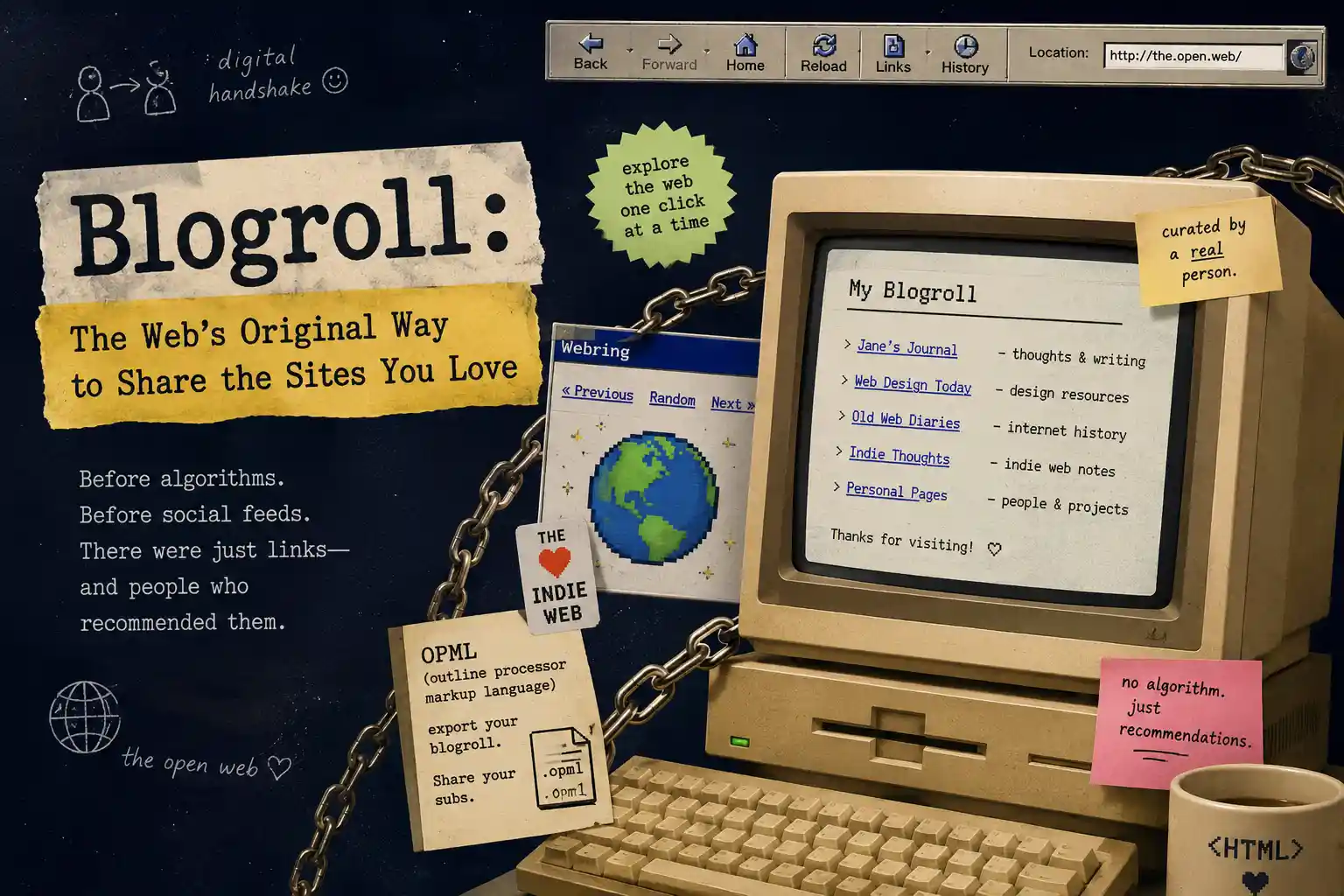
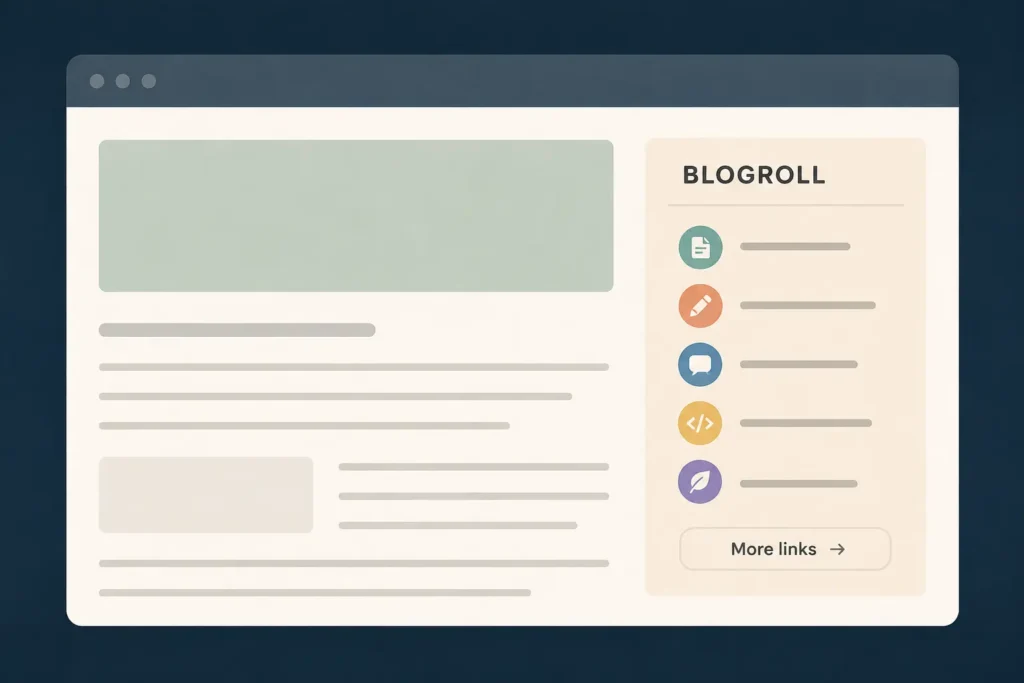
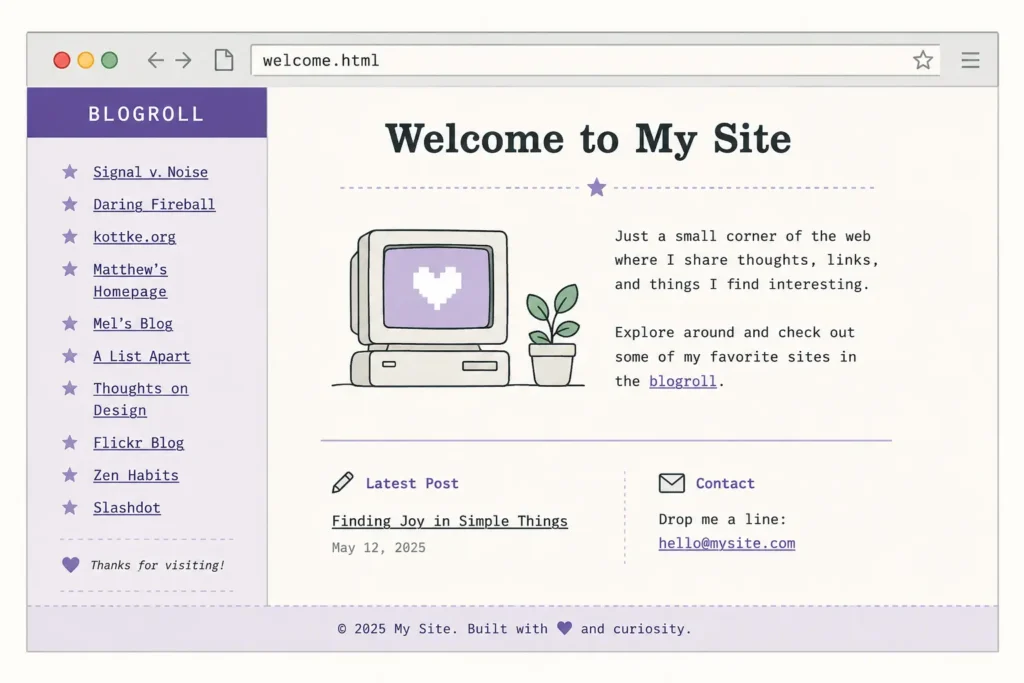
A blogroll is a list of links to other blogs or personal websites that a blogger reads, trusts, or recommends to others. It is usually seen on a website sidebar or on its own dedicated blogroll page. Bloggers make the decision on how it will be seen, sorted by topic or personal taste. It was a common feature of the early web from before algorithms decided what you’d see next.
Table of Contents
Where the Word Came From
The interesting thing is the word Blogroll is older than most people realize, and its origin is a pun. Writer Doc Searls coined the word blogroll in a post from December 17, 2000, based on describing favors traded between neighbors. Bloggers helped each other by linking to one another’s websites. This bit of history of blogrolls explains why the format always felt more personal than a plain directory.
Why Did Blogs Have Blogrolls?
Why did blogs have blogrolls in the first place? The honest answer is there were few other ways to discover websites at the time. In a simple explanation, a blogroll link is a name, a link, and sometimes a short explanation of why the blogger liked the site. No plugin required, just HTML and honesty. Early blogging platforms, including WordPress, included a “Links Manager” made specifically for this.
It said something about the blogger’s taste and their place in the wider blogging community. Finding a blog you liked was often the fastest way to find five more just like it. If another blogger added your site to their list, the polite response was to consider adding their blog to yours; it was called a digital handshake, and it wasn’t mandatory.
How Bloggers Discovered Websites Before Social Media
Blogrolls peaked in the blogosphere of the late 1990s and early 2000s, when personal websites were emerging, and there was no Facebook, X (Twitter), or algorithm-written feed to discover for you. Your blog largely was your presence on the internet, and many bloggers built loose blog networks simply linking each other. This is the story of how bloggers discovered websites before social media existed at all.
At the same time, web rings also overlapped, where member sites connected in a loop using “Previous” and “Next” buttons. You can see on this blog that there was a next blog and previous blog option. Our guide to internet webrings walks through how that system worked. The interesting part they both solved the same problem but in different shapes.
Later, some blogrolls adopted OPML (Outline Processor Markup Language), a simple file format for exchanging RSS feeds, so visitors could import an entire list of curated links into their own feed reader in one click.
Blogroll vs Social Media
| Blogroll | Webring | Social Feed | |
| Sorted by | The blogger’s judgment | Fixed loop order | Engagement algorithm |
| Maintained by | A person, by hand | A ring organizer | The platform |
| Leaves the platform | Always | Always | Rarely |
| Update effort | Manual, occasional | Manual, occasional | None, automatic |
This comparison explains why the format still matters.
Why Blogrolls Nearly Disappeared
It didn’t disappear quickly. As social media platforms and algorithm-driven discovery matured through the 2000s and 2010s, as social media platforms became better at recommending content, there was no use of hand-curating a dozen blogs.
There was another reason too. Some bloggers found that adding or editing blogroll carried real social weight. It could even be seen as a snub. I read the article by writer Dorothea Salo where she described dropping her blogroll entirely in 2005 after watching link decisions turn into interpersonal conflict.
The Indie Web Revival
Blogrolls never fully vanished, and in recent years they’ve quietly come back. The IndieWeb movement has helped revive blogrolls against algorithmic discovery, indirectly saying “here is what I actually read” without a platform deciding for you. You can check it out at the Indie Web Wiki, which tracks many active blogroll examples, and directories like Ye Olde Blogroll now have thousands of personal websites, organized by topic and updated by a human editor.
Developer Robert Alexander studied the blogroll and found they still form a real, connected network, smaller than the platforms that replaced them. He even said following blogroll links from 20 sites led him to over 150+ more sites.
Are Blogrolls Still Used Today?
Yes, but not much. They’re most common now among indie web developers, hobbyist writers, and personal site owners who value the open web over centralized platforms. Some developers still update them by hand in keeping with the format’s low-pressure spirit. And others pull fresh links automatically from a feed reader.
Building your own doesn’t take much. Start with sites you already read regularly and would confidently recommend to a stranger, not just ones you skim. Many bloggers include a short note explaining why they recommend each site and why this blog post is unique.
The Web That Still Recommends Itself
A blogroll is a small piece of internet infrastructure with an outsized history, born from a clever pun and built into the earliest blogging tools by default. It slowly faded when algorithm-driven content took over discovery, and many people appreciate the human recommendations that blogrolls offer compared with algorithm-driven feeds. If this kind of internet is what you like, our pieces on blog carnivals and the personal homepage era reflect a similar spirit.

Asif BC is a web developer with 2 years of professional experience in website development and modern web technologies. As the creator of Curiouxify, he researches and writes about interactive websites, internet history, browser experiments, digital culture, and the evolution of the web. His articles combine technical knowledge with careful research to document the creative and lesser-known corners of the internet.