Website Colophons: The Pages That Reveal How Websites Are Made
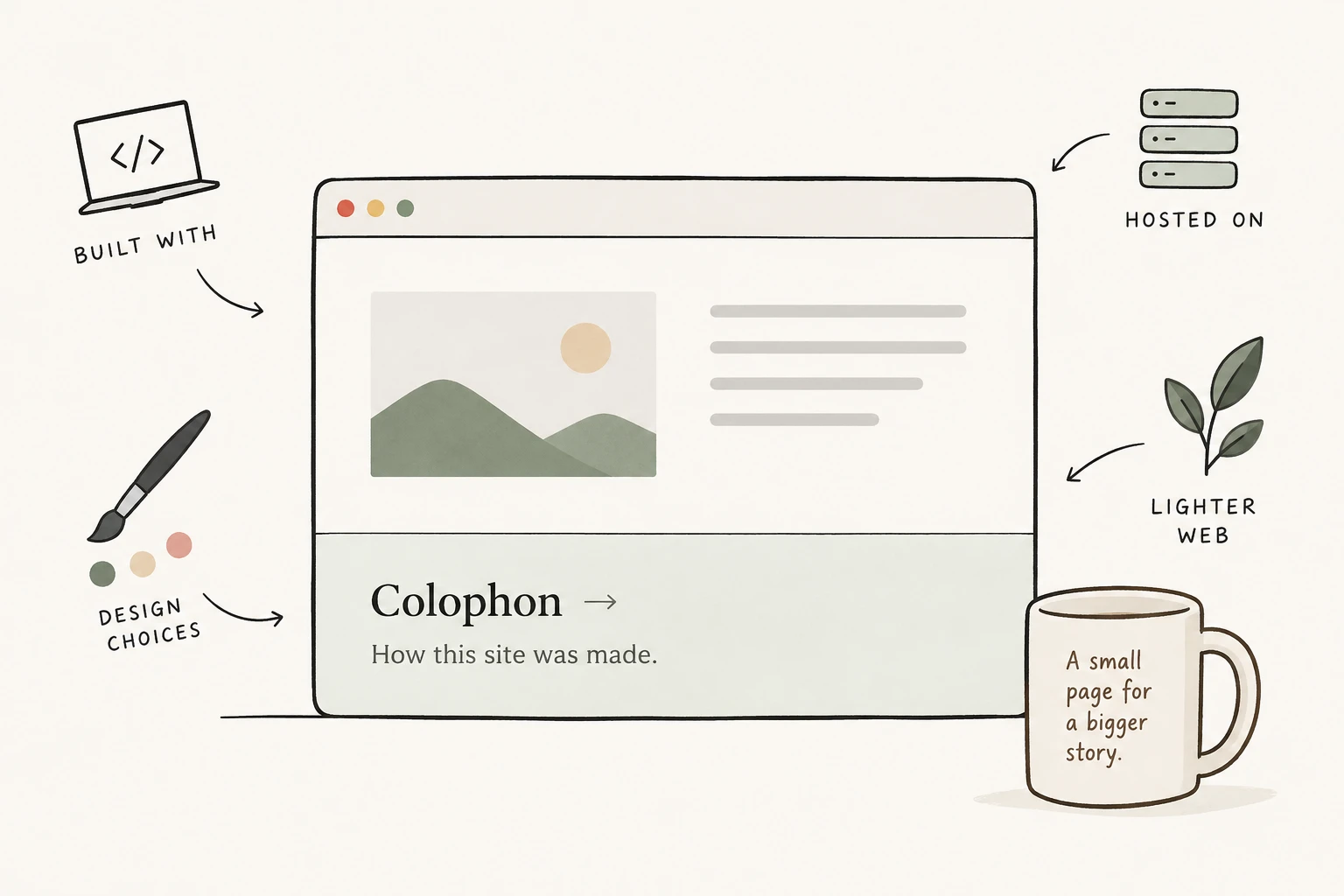
A website colophon is a short page, mainly visible in the footer section, that explains how a website was built. It follows a five-hundred-year-old printing term and repurposes it for the web, and it is one of the small trust signals that separate handmade websites from templated ones.
You can’t find any colophon page on a typical business site. They are mostly found on personal blogs, digital gardens, and static site builds where the person behind the site wants you to know exactly what went into it.
Table of Contents
A Word Borrowed From Old Books
The term colophon publishing came from when early printers added a closing note listing the typeface, paper, printer’s name, and date of production. It was a printer’s signature, a way of saying “this is how these things came into your hands.”
Over the years, web designers picked up the word, and the meaning transferred almost perfectly. A colophon does the exact thing that the printer’s note did in a book: it simply explains how a website was made, in their site instead of leaving visitors to guess.
How the Colophon Landed on the Indie Web
The practice didn’t arrive with a big product launch or a platform feature. It spread from person to person, much like many other indie web conventions. If you’ve read our indie web revival, you will get an idea and a pattern about this.
Back in 2013, early adopters were documenting their colophons as far, and the IndieWeb wiki’s colophon page has tracked examples ever since, describing it as a natural home for including privacy policies and design values.
This idea spread quickly. A colophon isn’t something a CMS generates automatically. The person who created the website needs to sit down and choose to write one, which is exactly why it fits so naturally into indie web culture.
What a Website Colophon Actually Includes
| Type | What it covers | Example |
|---|---|---|
| Technical details | Static Site Generator, Hosting, Fonts, CSS, Plugins, and other tools used to build the site. | Josh Barr explains why he chose JAMstack over a Hosted CMS and which Plugins he uses. |
| Design philosophy | The designer’s choices, coding style, typography, unfinished posts, and overall approach to building the site. | Maggie Appleton explains her Fluid Type Scale, “growth stage” Labels, and why she prefers Hand-coding. |
| Sustainability notes | Website Carbon Footprint, Page Weight, and the environmental impact of running a website. | Zanete Knits shows its website carbon footprint alongside its Tech Stack. |
Why This Convention Isn’t Just Nostalgia
It would be easy to file the colophon under internet trivia, but it’s answering a real need. As more sites are evolving with same method, using the same page builders and the same AI-assisted scaffolding, a colophon becomes proof of a human-decision process behind the website.
It also functions as a long-tail signal of authenticity. Nowadays, anyone can copy a design, but few people bother to explain why they made each choice, which is exactly what makes a colophon hard to fake and easy to read.
There’s a practical benefit too. A colophon can answer the where someone asked the “what did you build this with?” It’s a single, linkable answer to a question personal website owners get constantly, it similar to now page examples.
Where the Colophon Could Go Next
The technical colophon and the design colophon are well established. But the sustainable web design colophon is newer and still forming its own conventions, often borrowing letter-grade ratings from tools like the WCC (Website Carbon Calculator) to make page weight legible to a general reader.
Most of the people use this tool for website performance and environmental impact. That’s an observed direction, not a certainty. It must show that the colophon has outlived the printing press it came from, and builders in the handmade web show no sign of retiring it.
A Small Page That Explains a Lot
When I read several articles about a colophon, I noticed that it never drives traffic the way a viral post does. That’s not the point. It simply exists for those who scroll to the footer, and how this site was built without any without getting fed up. In the era of AI scaffolding and templates, that kind of web design transparency is becoming its own quiet statement.

Asif BC is a web developer with 2 years of professional experience in website development and modern web technologies. As the creator of Curiouxify, he researches and writes about interactive websites, internet history, browser experiments, digital culture, and the evolution of the web. His articles combine technical knowledge with careful research to document the creative and lesser-known corners of the internet.