
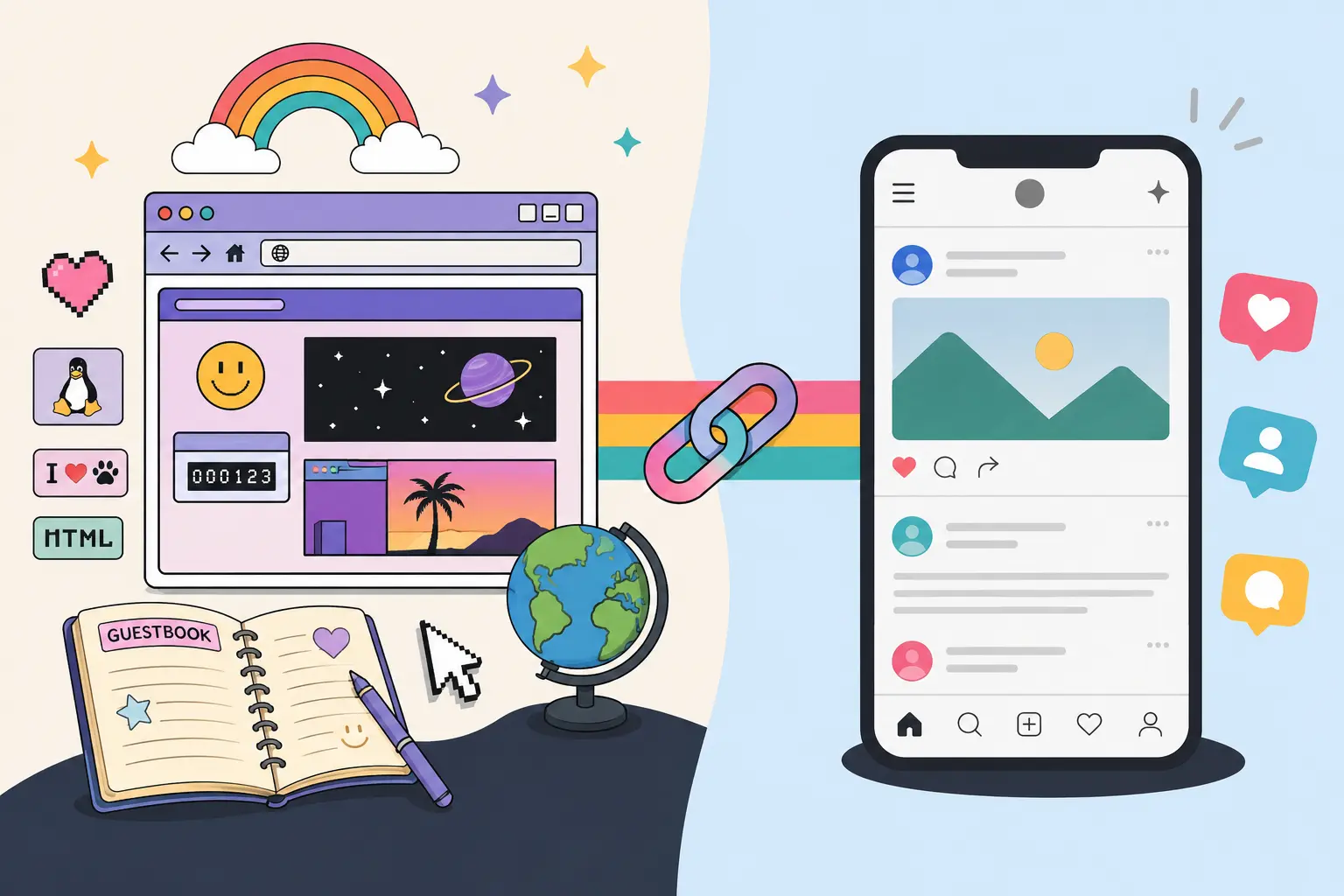
The history of web culture stretches back to the dial-up bulletin boards of the 1990s, and it includes access to personal homepages, webrings, blogs, and finally algorithm-driven platforms we use today. This matters because the internet was not always a handful of apps competing for attention. It had millions of small, handmade corners of the web, each one built by a person who wanted to express their perspective, share something, or just exist online in their own way.
Table of Contents
Life Before the Web: Where Early Internet Web Culture Started
Long before browsers existed, early internet web culture was already there in bulletin board systems, or what we call BBSes, and on Usenet newsgroups. People dialed into local servers, left messages, and discussed sci-fi novels at modem speeds. These spaces were text-only and slow by today’s standards, but they trained an entire generation of users to treat the network as a social place rather than just a tool.
In the early 1990s, the World Wide Web opened to the public; this instinct carried over directly. Sites like Global Network Navigator and curation projects such as Cool Site of the Day gave the first taste. In the same period, finding a good page on the internet felt like a big event worth telling friends about.
The Personal Homepage Era Ignites Web Culture
With the arrival of free hosting services like GeoCities and Angelfire in the mid-1990s, anyone could build a webpage without even knowing much code. This period is called the personal homepage era, where early web culture and communities really took shape. When I researched early websites that are still alive today, I saw homepages were messy on purpose. Multiple options like autoplay music, tiled backgrounds, and visitor counters were features of the website that showed the creator’s personality.
This is also where web publishing stopped being something that companies did. A teenager with a personal opinion about a TV show and a sixteen-year-old with a fan page for their favorite band had the same tools as a business.
Website Linking, Webrings and Guestbooks
Search engines in the 1990s were slow and unreliable, so people chose new websites through website linking. Webrings connected dozens or hundreds of homepages around a theme, where we could see “next site” and hop from one handmade page to another.
First of all, it was slow, a little chaotic, and completely dependent on trust between strangers, which is exactly why it worked.
When talking about Guestbooks, they served a similar social function. Instead of likes and comments, visitors give notes directly on a page and give their site link.
Internet Aesthetics: Blinkies, Buttons and Early Web Design Trends
The look of the old web was never accidental. Internet aesthetics in the 1990s and early 2000s leaned on tiny, collectable graphics. We already covered how the Blinkies and 88×31 web buttons work, letting people signal fandoms, operating systems, or causes they cared about in a tiny animated square.
These pieces fed directly into broader web aesthetics and web design trends of the era, even hand-coded tables standing in for real layout tools. These tiny graphics and handmade layouts blurred the line between website design and online art.
Web Culture Before Social Media: Forums, Blogs and Online Communities
| Web Culture Before Social Media | What It Felt Like |
|---|---|
| Forums | People came together around games, hobbies, and whatever niche topic they loved. |
| Online communities | Each community had its own jokes, regulars, moderators, and unwritten rules. |
| Blogs | People started sharing their thoughts and interests through personal blogs. |
| Blogrolls | Bloggers recommended other blogs they enjoyed, helping readers find new corners of the web. |
| Comment sections | Readers could leave a message and actually join the conversation. |
| Link sharing | People connected their websites by linking to each other instead of relying on an algorithm. |
| Digital culture | You didn’t just consume the web. You helped build it by posting, replying, sharing, and connecting with people. |
Why Web Culture Changed After Social Media Arrived
In the late 2000s and 2010s, centralized platforms took over much of the internet, and discovery shifted toward algorithm-sorted feeds. This is the major update of browser history and internet history. Homepages, webrings, and guestbooks did not disappear because people stopped caring about self-expression.
The trade-off was real. Reach grew, but ownership shrank. Fewer people control their own page today than at almost any point in internet history.
Frequently Asked Questions
1. Did web culture exist before social media?
Yes. Usenet, personal homepages, webrings, and forums built strong community before the modern social platform existed.
2. Why did webrings and guestbooks disappear?
Search engines and social platforms made discovery automatic, so the manual, link-by-link system is less necessary.
The Takeaway
We have to understand that web culture was never really about the technology. It was about what people did with it.
People built pages, exchanged links, created communities, collected strange things, shared their interests and created places that didn’t need an algorithm to tell people they were worth visiting. The old web never came back exactly as it was. But most of the ideas are.
If you want to see fanlisting websites, or take a look at the golden era of Flash websites for more of the old web’s DIY energy.
Sources for further reading:
- Cybercultural: Internet History and Its Impact on Our Culture
- Library of Congress: Web Cultures Web Archive
- Internet Archive Wayback Machine

Asif BC is a web developer with 2 years of professional experience in website development and modern web technologies. As the creator of Curiouxify, he researches and writes about interactive websites, internet history, browser experiments, digital culture, and the evolution of the web. His articles combine technical knowledge with careful research to document the creative and lesser-known corners of the internet.