
12 Single-Serving Websites That Prove One Page Is Enough
A single-serving site is a website that has only one page and one domain. That’s it, nothing more. This post explores the best single-serving websites that still work today — sites that were never built to do anything useful, and have survived anyway.
In 1994, a software engineer named Jeff Abrahamson registered Purple.com because Jeff**’s favorite color was purple. The website is just a purple-colored site, with no navigation, no menus, and no purpose for visiting the page. It ran almost 23 years with the same thing, until a mattress company bought it for $900,000 in 2017. Today, when you visit the site, it shows a mattress-based website. The purple page is gone forever.
I’ve spent some time digging through the early web pages, and I keep running into these strange little time capsules. The website logic is simple; they do nothing, sometimes just one color only, or one sentence. The interesting part is that some of the website still running longer than Google has existed, and no one has tried to monetize the site.
Table of Contents
What Makes a Website Truly Single-Serving?
The term has a precise origin. In late 2008, a blogger named Jason Kottke noticed a pattern in web technology. Websites that existed to do exactly one thing, each with its own dedicated domain. Then he called them single-serving sites, and the term stuck.
But the format already existed before it had a name. The oldest single-serving website is purple, online since 1994, the same year a company called Netscape was formed. By 1997, another purposeless website appeared, and it’s called Tired.com . Then came Zombo.com, which promised that you could do anything on the web. The interesting part is that in 2001, a website called yourethemannowdog.com eventually grew into YTMND, where a community generated its own subculture of single-serving website humor before the term existed. You can still visit the site, and one thing is sure it makes you laugh. Whether you stay on 4 seconds or 4 hours, the output they give is the same.
Why People Keep Making Them
Some people make them for fun. When Kottke named the pattern, thousands of these websites were built, and new ones still appear every week. These minimalist websites are built by people with an idea exactly one page long, one that loses nothing by being contained.
Rafaël Rozendaal, the one man who built more than 100 single-serving websites and sold domains to art collectors and digital creatives across the USA and Europe. One of the famous sites, The Useless Web, was founded in 2012. The logic of the site is simple: when you click the button, it goes to a random website. If you’ve wondered what drives that impulse, why people build useless websites goes deeper.
Single-Serving Websites vs. One-Page Websites
These two terms sometime connected with one logic, and the confusion matters.
| Single-Serving Website | One-Page Website | |
| Purpose | Answer, entertain, provoke, or create. Complete in itself. | Present a business, product, or portfolio in scrollable format. |
| Navigation | No role for navigation. | Anchor-linked sections simulating multi-page navigation. |
| Lifespan | Maintained indefinitely as a curiosity for sometimes decades. | Updated regularly to reflect current offerings. |
12 Single-Serving Website Examples Worth Exploring
These sites were taken from my research and not ranked by traffic.
Serving Websites
These sites solve some interesting questions. They exist because someone asked the same question regularly, and a dedicated URL was more elegant than a Google search.
1. HowManyPeopleAreInSpaceRightNow.com

Visit: https://www.howmanypeopleareinspacerightnow.com/
Currently, a specific number of humans are not on Earth. This site represents how many astronauts are in space. I check this every few weeks. The number is always higher than I expect. The data is collected through the Open Notify Organisation.
2. DownForEveryoneOrJustMe.com
Visit: https://downforeveryoneorjustme.com/
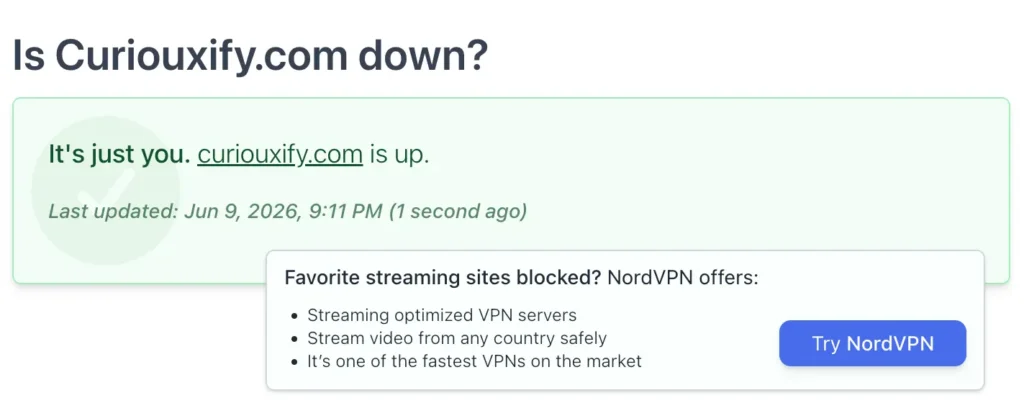
When we worry about, What should I do if my site goes down? On this site, you just enter the site that you want, and it tells the site is down or not. Thousands of people have used it to tell the difference between “my connection is broken” and “their server is broken.” It has never tried to be anything else.
Interactive Single-Serving Websites
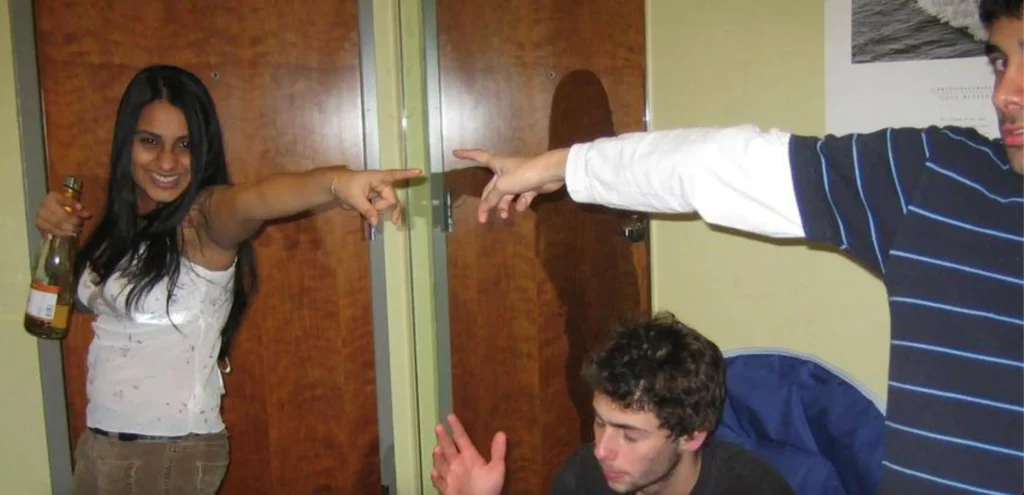
These are the fun websites to visit because they spread fast online — no description does them justice, it looks like “Move your cursor, and it finds a photo of someone pointing there”. For more cursor-driven web experiments, the mouse-responsive websites collection has plenty more.
3. PointerPointer.com
Visit: https://pointerpointer.com/
This one is an interesting site. Move your cursor anywhere. The site automatically finds your mouse cursor and a random person pointing directly at it. The site was built by Amsterdam studio Moniker in 2012. It creates a moment in every visit, not because it tricks you, but the execution is enough to keep thousands of users coming back. The joke is that it works. There’s a full breakdown of what Pointer Pointer is if you want the complete story.
4. Patatap.com

Visit: https://patatap.com/
When you press any key, a sound plays. A shape bursts into animation and suddenly disappears. Same as another key, another shape. The site was created in 2014 by Jono Brandel in collaboration with Japanese electronic duo Lullatone. Patatap was built to introduce “visual music” to a broad audience. The traffic was huge, nearly ten million people have used it.
5. FindTheInvisibleCow.com

Visit: https://findtheinvisiblecow.com/
There is one blank page, when you move your cursor and the closer you get to the hidden cow, the sound of mooing gets louder. The hot-and-cold game every child has played, inside a browser tab.
Artistic Single-Serving Websites
Some experimental websites in this format are simply art, specifically browser-based experiences where the domain is the main title, the page is the canvas, and interaction is the composition. It’s what some call web design as an experience, explored further in websites where design is the experience.
6. AlmostCalm.com

Visit: https://almostcalm.com/
Move your mouse. A blue and pink gradient follows it, slowly. The site responds but doesn’t urgently react. The feeling isn’t quite calm and isn’t quite not-calm, which is an exact match of the domain name.
7. SometimesRedSometimesBlue.com

Visit: https://www.sometimesredsometimesblue.com/
Created in 2007 by digital artist Damon Zucconi. The page has only 2 colors, sometimes blue and sometimes red. You never know which one will appear. You can only observe. You open it expecting to interact and discover there’s nothing to do with this site. When I opened it, I got a red screen.
8. SinceYouArrived.world
Visit: https://sinceyouarrived.world/
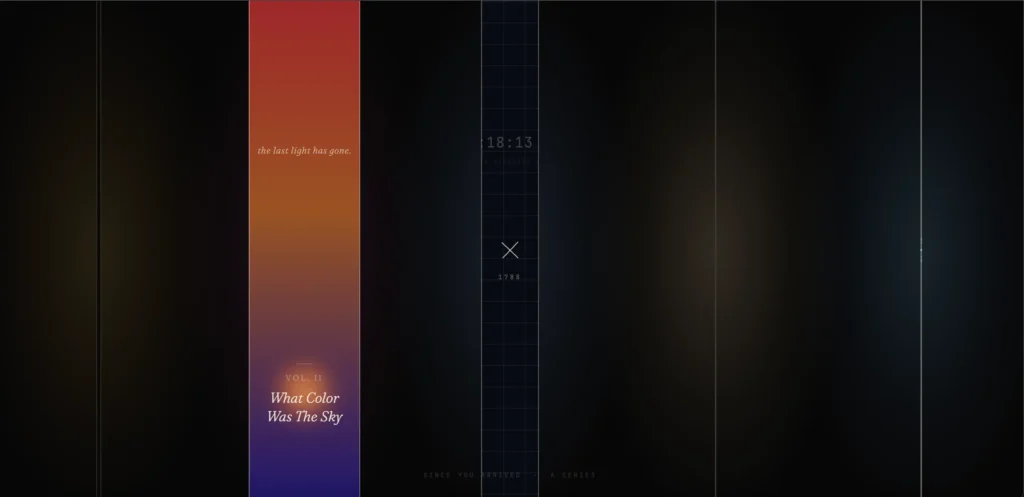
The site tracks live real-world data, including births, deaths, scientific papers published and species assessed as endangered, accumulating since the moment you arrived. Most single-serving websites exist purely for fun. This one is different, but it asks you to reckon with where you are in time.
Absurd Single-Serving Websites
Absurdity is where the format started. The best absurdist single-serving websites carry a sharpness under the joke, a point of view that would be far less interesting as an essay. For more information, weird websites that make no sense go much further.
9. IsItChristmas.com

Visit: https://isitchristmas.com/
The domain name is the question, and the page is the answer. The word you see on the page is a Hindi word that means “No”. 364 days a year: No, and on December 25th it’s “Yes”. The commitment is the punchline.
10. Zombo.com
Visit: https://zombo.com/
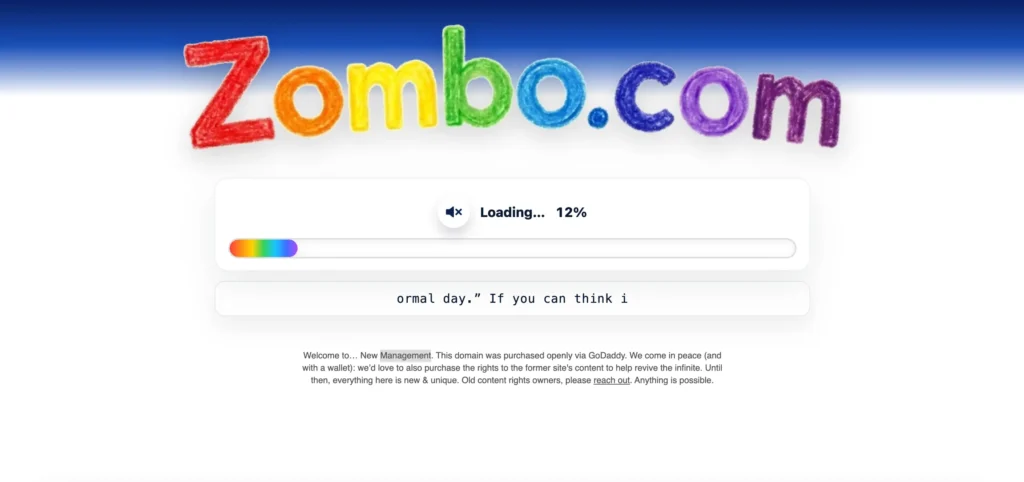
The site was created in 1999 by Joshua Levine as a parody of Flash intros. Those were elaborate animations that made visitors wait before reaching any actual content. It’s only the intro, and it loops. A narrator makes big cosmic promises. There’s nothing behind them.
The site survived Flash’s death, migrated to HTML5 and ran for over twenty-five years. In February 2026, GoDaddy purchased the domain.
11. Endless.horse
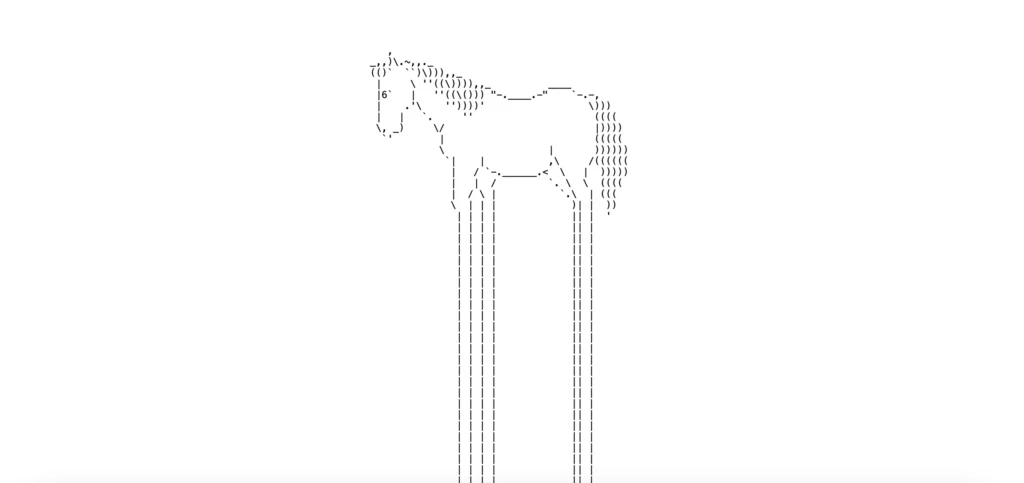
Visit: http://endless.horse/
The domain name matches the web page. A horse has very long legs. They get longer as you scroll. They never end. The URL is the complete description of the experience. I scrolled for two full minutes before I accepted it was never going to end.
12. SadTrombone.com
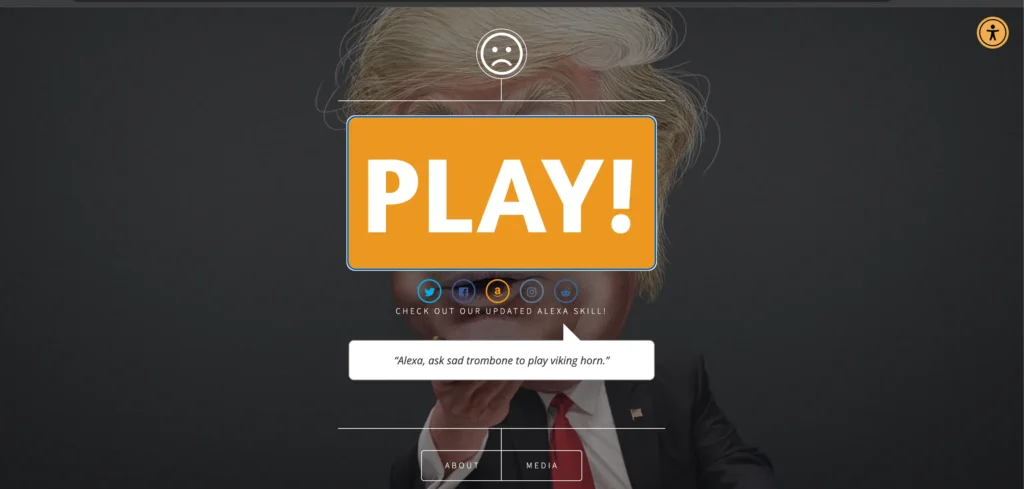
Visit: https://sadtrombone.com/
Turn your speakers on before visiting. There is one button. One sound. The classic “wah wah wah wahhh” of failing trombone, ready to deploy after any bad joke, awkward moment, or personal defeat. The site was launched in 2009 and became a staple of early social media culture as a reaction tool. It has no other features. The background image looks like the US President. I’ve deployed this after at least three bad client calls.
FAQ
What is a single-serving website?
A website with one domain, one page, and one purpose. There is no navigation system or no extra content.
What is the oldest single-serving website?
Purple, registered in 1994 as a plain purple page. It ran almost 23 years before a mattress company bought it for $900,000 in 2017.
Are single-serving websites still being made?
Yes, Some of the creators still build them for art, humor, and internet culture.
Final Thoughts
Jason Kottke named the format in 2008. PointerPointer has been pointing since 2012. Patatap had nearly 10 million visitors, and the best part is that they never added a second page.
These unique websites survive because someone, somewhere, keeps deciding they’re worth 12 dollars per year. Most sites exist to grow. Single-serving websites exist to persist.

Asif BC is a web developer with 2 years of professional experience in website development and modern web technologies. As the creator of Curiouxify, he researches and writes about interactive websites, internet history, browser experiments, digital culture, and the evolution of the web. His articles combine technical knowledge with careful research to document the creative and lesser-known corners of the internet.