Fanlisting Websites: Tiny Communities That Connected the Early Web
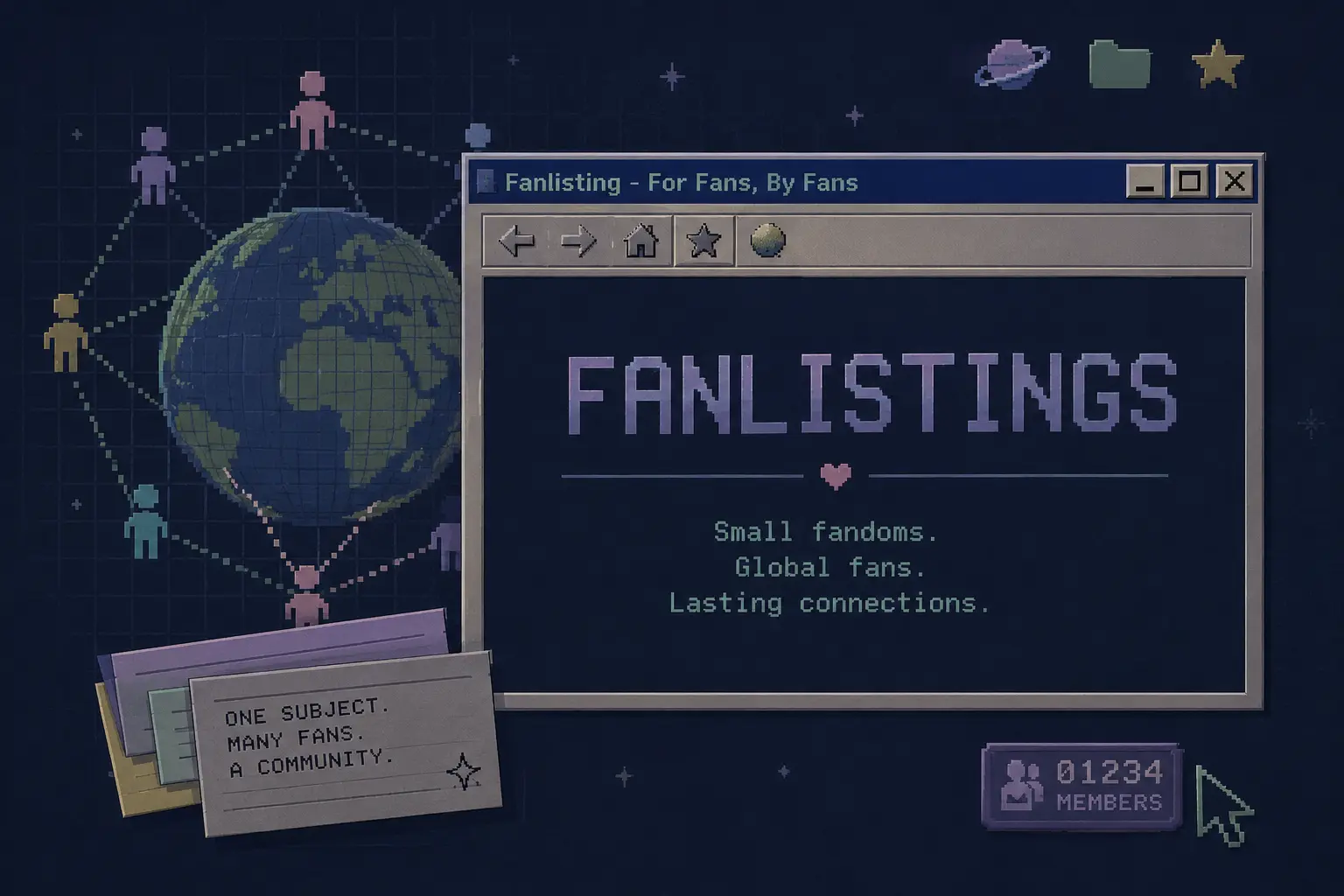
A fanlisting is a website dedicated to a single subject, created so fans around the world can easily add their name and country to a public list to show their support. Started in 2000 by Janine through a Fanlisting Network, fanlistings are free to join and typically require only a name, country, and email address, making them among the earliest forms of organized online fandom.
Most people didn’t search for this. They usually explored the Neocities site or the Wayback Machine and caught them. The format looks nothing like a modern fan forum, Discord server, or Reddit, which is exactly why it stands out.
Table of Contents
What Makes a Fanlisting Different From a Fan Page
Most articles explain fanlistings in a similar way. In simple words, it exists to collect and display a membership list. Whether it is a Movie character, Video game, or even a specific song, the subject appears at the top of the page. Visitors can see how many members joined, the names and the countries of the members.
This narrow focus is what separates a fanlisting from a fansite. Unlike a fansite, a fanlisting rarely includes that there are news, fan art, episode guides, or forums. But a fanlisting is almost always a single page for a single purpose: memberships.
Some owners build a full fansite around their fanlisting as an anchor. Still, the 2 concepts are different, which is why fanlisting vs fansites is one of the most common misconceptions among people.
History of Fanlisting Websites
The “fanlisting” word was on track in May 2000, when Janine launched the Fanlistings Network, generally it calles TFL. The idea was simple: give every corner of internet fandom, no matter how small it is, a formal home for its supporters to be counted.
TFL grew into a fanlisting directory listing into thousands, organized by category, from actors and musicians to anime series and even inanimate objects fans felt strongly about.
When the arrival of Anime and Manga fandoms grew so large within TFL that the category eventually split off into its own fanlisting network, focused entirely on Japanese animation and comics. Around the same year, similar fanlisting directories and independent networks appeared, including smaller alternatives built specifically.
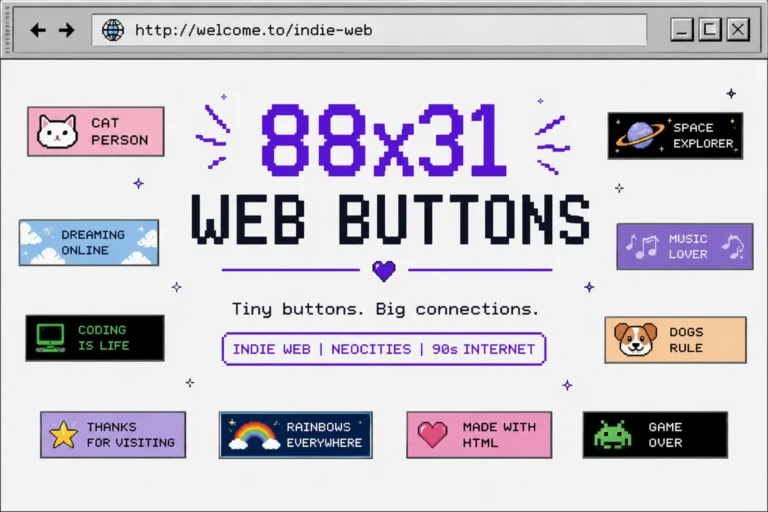
Over the years, it emerged into a cluster of other early personal website customs, including the webring, the guestbook, and a small graphic known as an 88×31 button. A fanlisting’s join button is a direct descendant of that same badge culture, some people pinned to their personal homepage to show the fandom they were part of.
This whole cluster is a defining piece of web nostalgia and early webmaster culture, from an era where the HTML code was written by hand.
Something like:
| 2000 | The Fanlistings Network launches |
| Early 2000s | Fanlistings spread across personal websites |
| Mid 2000s | Anime Fanlistings Network grows |
| 2010s | Social platforms replace many fan communities |
| Today | Neocities and the IndieWeb keep the format alive |
How Fanlisting Websites Work
Curious to know how fanlisting websites work under the hood? Most of them run on a basic structure:
- A subject page for describing what the fanlisting is for; sometimes they add strict rules to join.
- A join form asking for a visitor’s name, country, and usually an email address for verification.
- A members list. Sometimes site owners add them manually or use a small script that adds new entries automatically once approved.
- A codes page with small linkback graphics, so members can proudly display their membership on their own site and which helps bring new visitors.
Older fanlistings are built with basic HTML code written entirely by hand, with the owner manually pasting in new names when new membership requests arrived.
Later, flat-file and lightweight database scripts were built specifically for this purpose; they update automatically when a new member joins.
Directories like TFL also impose some rules on listed sites. A fanlisting has to be updated at least every couple of months, so visitors think the site is still active and not abandoned.
Fanlisting vs. Webring vs. Fan Shrine
| Format | Example |
|---|---|
| Fanlisting | Join a Pokémon Fanlisting by adding your name to the members list. |
| Webring | Click through a ring of websites dedicated to retro games. |
| Fan Shrine | Browse a website full of Pokémon artwork, facts, wallpapers, and personal tributes. |
Are Fanlisting Websites Still Active?
Yes, they are still active but not like in the mid-2000s. If you’re wondering whether fanlisting websites are still active, look at the source directly: The Fanlistings Network is still running, and the interesting part is that thousands of fanlisting websites are still active.
A steady stream of fanlistings and near-identical “shrine plus fanlisting” combo sites, and many are hosted on Neocities, tagged simply as “fanlisting” or “fansite”.
So some people thought the end of Geocities also affected fanlistings disappearing. They migrated to the same free static hosts and IndieWeb adjacent communities that carried the rest of small-web internet culture.
Internet Archive is the only way to see old fanlisting websites and what they looked like since the early 2000s.
How to Join a Fanlisting?
Ever wondered how to join a fanlisting? It’s close to friction-free by design:
- First, find your favorite subject by searching in the Neocities fanlisting tag.
- Fill out the join form with your name, country, and email.
- Then wait for approval. Some sites can take hours; others take days.
- Once you get the approval, you’ll appear on the members list, and you can grab the linkback code for your own site if you have one.
Starting Your Own Fanlisting
Yes, anyone can start their own fanlisting page and apply through directories once it’s built. Pick a micro-niche content and give it a distinct subject page, a join form and a members list. Still, free flat-file scripts remain the standard way to handle this without needing a full database setup.
The maintenance commitment is the part most new owners underestimate. A fanlisting page without any updates or silent for months can lead into abandond, and even directories can delist inactive websites.
Fanlisting Examples
Fanlisting websites are built with different subjects.
- Some focus on book series and anime series.
- Built for a song or a movie character.
- Neocities built for shows and games that only came out this year.
The subject matters less than the format. If it has fans, it can have a fanlisting.
Frequently Asked Questions
Is a fanlisting the same as an official fan club?
The answer is no. Directories are explicit that a fanlisting isn’t official unless the celebrity or studio has said yes. Most fanlisting owners are careful to describe their site as fan-run.
Do you need a website to join a fanlisting?
No. A name, country, and a working email are usually the only requirements. A linkback is appreciated if you have a site, but it’s completely optional.
Why do fanlistings only ask for a name and country?
It keeps user privacy and spam prevention. And it helps to sort out country-wise member statistics.
Are there still new fanlistings being made in 2026?
Yes. New fanlistings for current shows, games, and public figures continue to appear regularly on Neocities and through The Fanlistings Network.

Asif BC is a web developer with 2 years of professional experience in website development and modern web technologies. As the creator of Curiouxify, he researches and writes about interactive websites, internet history, browser experiments, digital culture, and the evolution of the web. His articles combine technical knowledge with careful research to document the creative and lesser-known corners of the internet.