
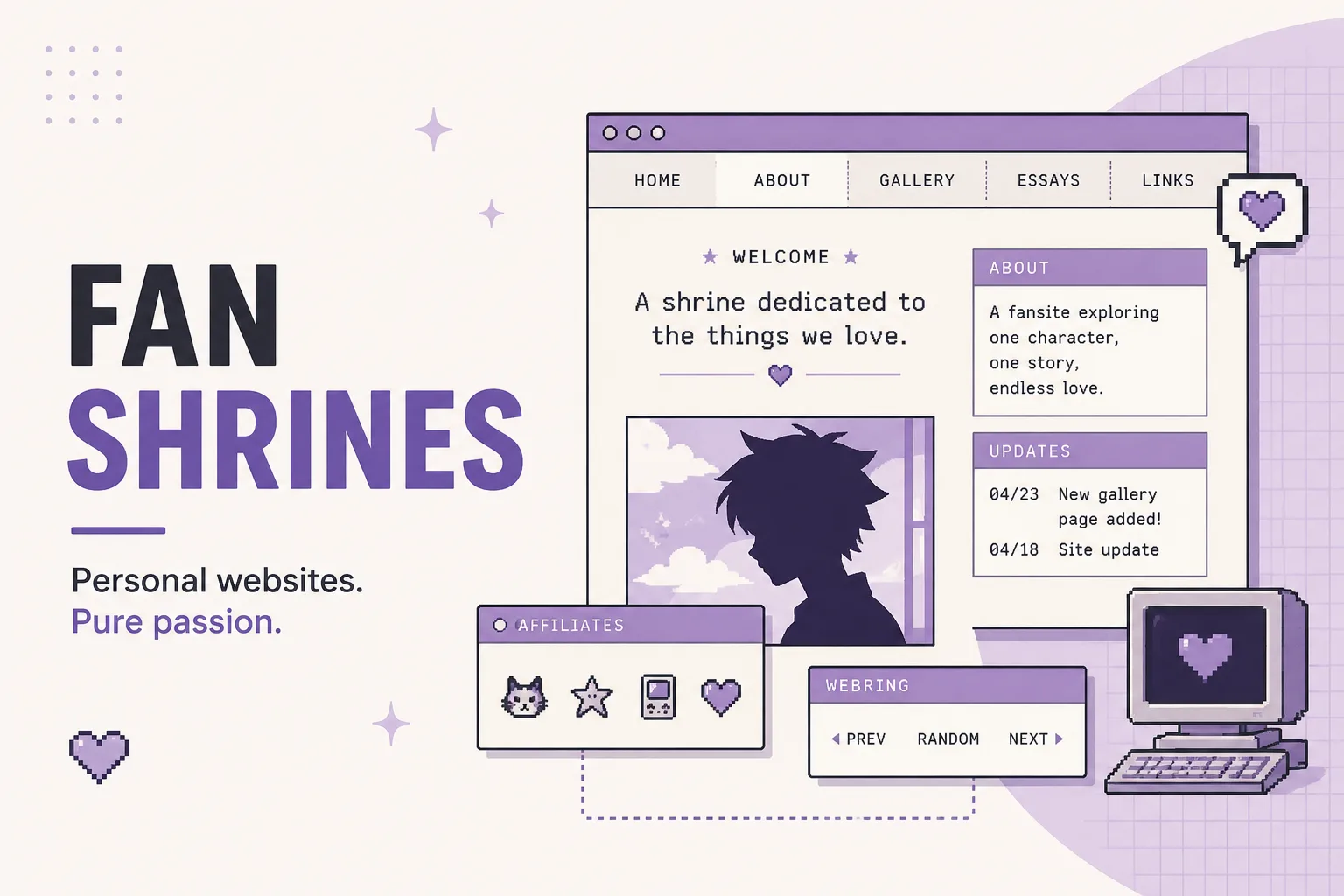
Fan shrines are personal websites built by a fan to explore a single character, pairing, or piece of media in as much depth as they want. There is no algorithm deciding what gets published, no committee, and no editor deciding what goes on the page. Only one person decides what their favorite thing deserves.
Table of Contents
What Are Fan Shrines?
A fan shrine is different from a general fan page because it stays narrow on purpose. Instead of covering an entire show or video game, a shrine usually focuses on one character, one relationship, or one specific obsession. A character shrine might be dedicated to a video game villain, complete with a profile, screenshots from every game they appear in, and a main page of their motivations.
What makes shrines feel different from other content is their tone. They read like chatting with their friends, not like a Wikipedia model. That personal voice is the whole point.
Fan Shrines vs Fanlistings vs Fandom Wikis
| Type | What it does | Who runs it |
| Fan Shrine | Deep dive into one character or pairing, written and designed by one fan | A single creator |
| Fanlisting | A directory that collects the names of fans who love a specific thing | A single owner, but built for fans to join |
| Fandom Wiki | A broad, collaborative encyclopedia of an entire show, game, or franchise | Many editors |
A shrine can include a fanlisting inside it, and often does. But A shrine is always personal and opinionated, while a fanlisting is just a signup list, and a wiki is a group reference document with no voice behind it.
A Short History: From GeoCities Bedrooms to the Neocities Revival
Back in the 2000s, shrines were everywhere on the internet, even on personal homepages. Free hosts like Angelfire, Geocities, and Tripod made it easy to build a website without even coding experience. They were mainly created for their favorite anime character. If you want a fuller picture of that era, our guide to the personal homepage era covers everything, starting with the whole culture, and it fits right into the bigger story of forgotten websites that shaped the early internet.
Old anime character shrine websites from the early 2000s tended to follow a similar pattern: a profile page, a dozen screenshots, some fan essays, and a guestbook at the bottom. When LiveJournal communities like charactershrine took off, fans called “shrine of the year” style roundups, which shows just how organized this hobby became.
The concept is still alive. It moved. Today, shrines are having a real second life on Neocities and similar platforms, built by a mix of longtime fans and Gen Z who never experienced the original era but love the format anyway.
How Fan Shrine Websites Are Structured
Most shrines share a recognizable skeleton, even decades apart in style.
1. Navigation and sub-pages.
A shrine website always splits into sections: a profile or overview, a gallery, an essay or analysis, and sometimes fan art or fan fiction. Some developers created extra pages using JavaScript toggles instead of separate files, which keeps the whole shrine feeling cohesive as an object.
2. Content sections.
Writing is the heart of shrine websites. This is where the shrine’s personality lives, whether they rank favourite moments, provide character analysis, or images of favorite character with commentary attached.
3. Affiliates and webrings.
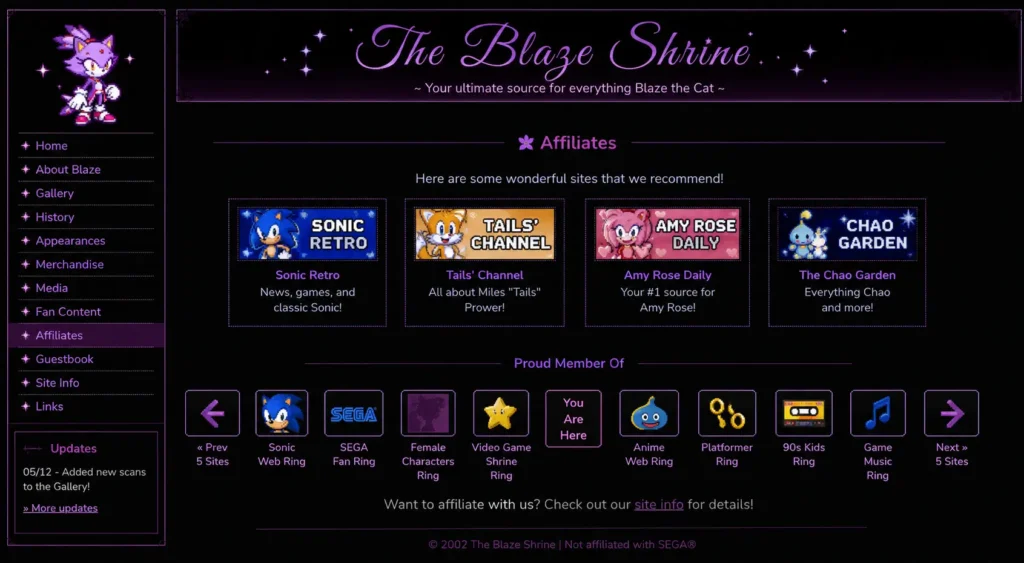
The current scenario of shrines rarely exists alone. Most of them right now are affiliate pages, and many join a webring, a chain of related sites that link to each other in sequence. If you want to know how these internet webrings work, check out this link.
Common Design Elements You’ll Recognize
Like I said, even a shrine built last month tends to borrow visual habits from the 2000s. They use trending items like hover effects on icons, small navigation buttons, and decorative badges that are everywhere. Many of them still display blinkies, tiny animated GIFs that show off a fan’s interests, and it’s very common to find an old-fashioned guestbook tucked into the footer for visitors to sign. Personally, I covered these content types like blinkie websites and internet guestbooks, since they show up on shrines constantly.
Why People Still Build and Maintain Them
Shrines take real effort, and there’s no algorithm rewarding that effort with views. So why keep going?
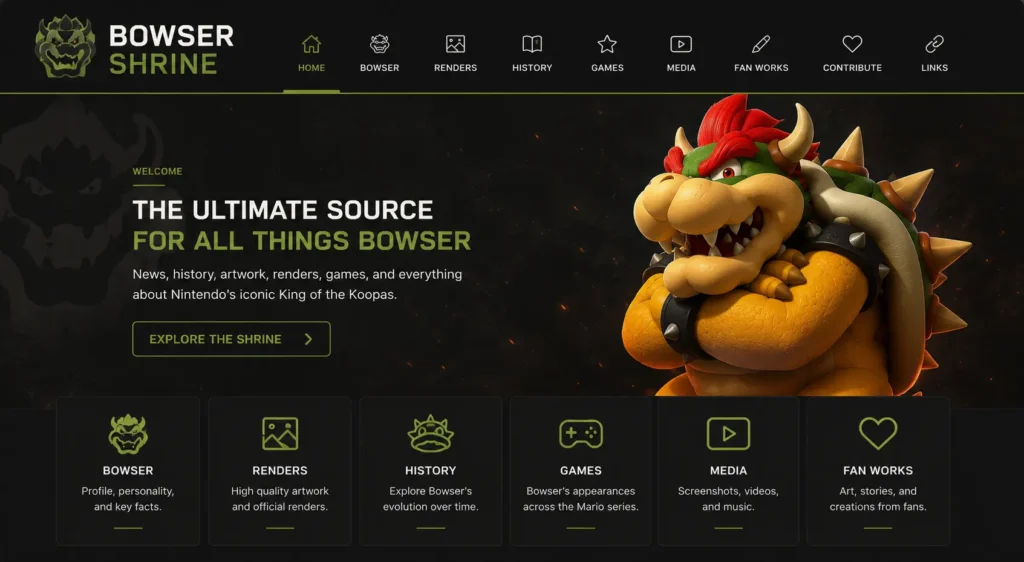
The website, like the browser shrine, has been updating since 2006. The developer of this site still tracks down rare renders, restores old images, and give credits who contribute. That kind of long-term devotion is what people mean when they talk about character worship in internet culture. It’s not about visitors. It’s about being the person who preserved something that mattered to them before anyone else thought to.
How Fan Shrines Shaped Today’s Indie Web
Fan shrine culture helped shape today’s Indie Web, where people build personal websites to express themselves instead of making money. Shrines proved that a website could be entirely personal, not monetized, and still worthy to build. That spirit runs through today’s wave of indie fan websites, many of which use the exact layout habits shrines popularized: custom navigation, personal writing, and a total change of what a professional website is supposed to look like. Our post on the indie web revival looks at how that mindset has come back to the sites.
Where to Find Fan Shrines Today
There are a few places you can worth exploring.
Neocities hosts an enormous, actively updating collection of Neocities shrine websites, searchable through tags, and it’s the easiest way to see the modern version of this hobby in action.
Another one is Fanlore; it’s a fan-run wiki that documents shrine history and terminology in more academic detail, Useful if you want to learn more about the history of fan shrines.
The Wayback Machine is the best way to see shrines from the GeoCities.
Final Thoughts
Fan shrines remind us that the internet world doesn’t have to revolve around algorithms or engagement metrics. Sometimes one thoughtfully built website about one favourite character Says more about online creativity than a thousand social media posts. That’s why fan shrines continue to inspire a new generation of personal websites today.

Asif BC is a web developer with 2 years of professional experience in website development and modern web technologies. As the creator of Curiouxify, he researches and writes about interactive websites, internet history, browser experiments, digital culture, and the evolution of the web. His articles combine technical knowledge with careful research to document the creative and lesser-known corners of the internet.