
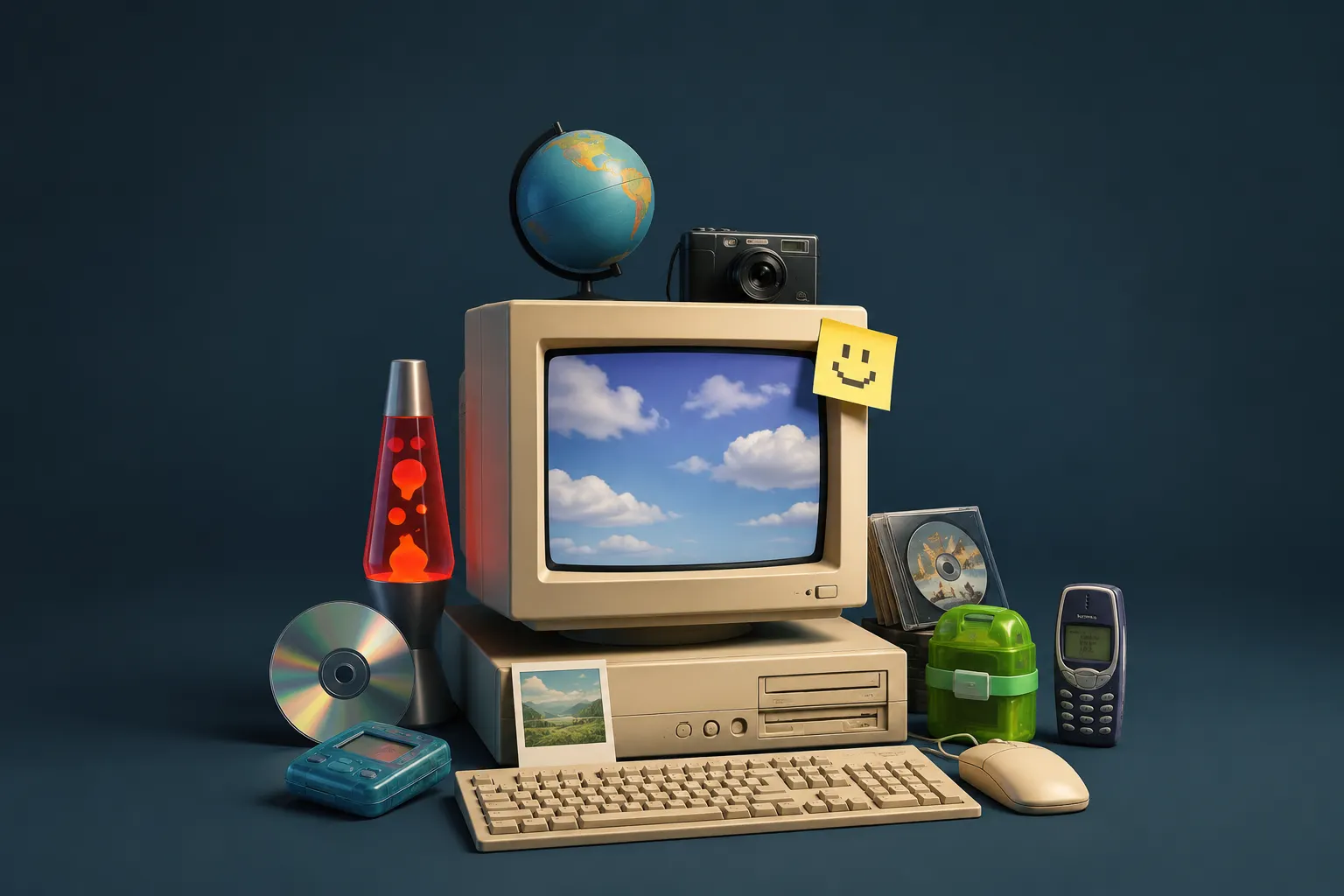
Forgotten websites are old parts of the internet that have disappeared, been abandoned, or become inaccessible as technology and the internet have evolved over time. Many of these early websites, browser games, and digital worlds were once popular in the 2000s before they vanished due to new technology and modern platforms.
The forgotten internet was very different from today’s web. It felt more personal, experimental, and even unpredictable. Instead of today’s algorithm-driven feeds and polished apps, the early 2000s were filled with handmade pages, strange communities, Flash animations, weird experiments, and many of these websites were built purely out of curiosity.
We can find some of those websites through archives like the Wayback Machine, while some of them have already disappeared forever. From old Flash websites and forgotten browser games to abandoned communities and extinct social platforms, these websites existed before the modern internet era.
Table of Contents
What Was the Forgotten Internet?
Before social media dominated the web industry, the internet was filled with strange, personal, and highly experimental websites. The early internet websites of the late 1990s and 2000s often looked colorful and chaotic, but the randomness was part of their identity. People created fan pages, browser games, online diaries, and entire digital communities simply because they enjoyed building things online.
Unlike today’s algorithm-driven platforms, the old web rewarded exploration. Users jumped from one page to another through blogrolls, web rings, and random links instead of traditional recommendation feeds. This created a different style of browsing experience. Many of those forgotten websites eventually disappeared as the coming of large social platforms.
According to data published by the Pew Research Center, social media usage increased dramatically during that period, and it changed the perspective of the internet.
Today, we can find rare old internet archives through screenshots, preserved projects, and web archives. Internet Archive continues documenting millions of web pages from the early stages of the web. These preservation efforts add historical value to internet culture research and support long-term digital accessibility.
Why So Many Early Websites Disappeared
Thousands of old websites, Flash games, and independent web projects disappeared in the late 2000s and early 2010s. Many of them used outdated technologies like Adobe Flash, which was officially shut down in 2020. Countless interactive experiences became inaccessible to users around the world.
Even in the United States, platforms like GeoCities represented one of the biggest eras of personal web creativity. Thousands of users created pages filled with GIFs, custom layouts, and fan pages. In 2009, Yahoo made a decision to end GeoCities, then the huge part of the internet culture vanished almost overnight. While some groups archived those pages, many of them are lost permanently.
Another reason I found is that, during the mid-2000s large companies like Facebook, YouTube, and Reddit were the main platforms for users because they were easier to use and they had huge audiences. Over time, the internet changed into a streamlined and mobile-focused platform, which affected many experimental or independent websites.
Researchers even warned about “link rot,” where webpages slowly disappear over time. Another study published by the Pew Research Center found that a significant percentage of webpages eventually become inaccessible, especially older content on the internet. This growing problem continues affecting the preservation of forgotten websites that no longer exist on the modern internet, making digital preservation increasingly important.
When the Internet Felt More Human
The early internet felt very different from today’s web. Many of these websites looked messy when compared to modern standards, but they also felt more authentic and unpredictable. In the 2000s, discovering something weird felt genuinely exciting because the web was smaller, slower, and less controlled.
In that period of time, A teenager in California could create a page about music, video games, or sci-fi movie pages using basic HTML and animated GIFs. The websites were filled with visitor counters, custom cursors, colorful backgrounds, and even autoplay music. This era helped shape the identity of the internet where creativity matters more than optimization and goals.
One major shift happened when social media platforms replaced independent websites. Instead of opening thousands of random pages, users gradually moved toward centralized apps and feeds. According to Statista, social media usage continued growing rapidly throughout the year 2010. As these giants took over the internet, many smaller communities and forgotten online communities from the early internet era slowly vanished.
Even modern developers and designers still talk about the freedom of the early web because it encouraged experimentation. Some modern creators continue building strange and artistic websites inspired by that era, trying to recreate that nostalgic feeling.
Forgotten Websites That Defined the Early Web
The early internet was filled with creativity, chaos, and surprisingly personal experiences. Long before modern social media platforms took over, thousands of users spent hours exploring strange web pages, browser communities, Flash games, and online experiments. Many of these websites shaped internet culture in the late 1990s and early 2000s, even though most of them have now disappeared and lost their popularity.
GeoCities
Geocities was launched in the 1990s, and it became one of the biggest symbols of the old era. Users could create personal pages filled with GIFs, visitor counters, colorful backgrounds, and autoplay music. It became one of the first platforms to allow ordinary people to experiment with web design without any professional skills. At its peak, GeoCities hosted millions of websites before Yahoo officially shut down in 2009.
MySpace
Before Instagram and TikTok existed, MySpace dominated the whole online culture in the United States. Users customized profile pages with music, glitter graphics, and HTML edits, making every profile feel unique. Unlike modern social media apps, MySpace allowed more personalization, which is the reason why this platform is still remembered. Over the years, Facebook’s cleaner and simpler design slowly replaced MySpace’s chaotic style.
Flash Game Portals and Forums
I still remember the sites Newgrounds and Miniclip, they became a major part of online entertainment during the Flash era. These platforms hosted browser games, animations, and internet experiments that defined a generation of online users. Today, we use forums and platforms like Reddit and Quora; at the same time, the internet forums created smaller communities where people could talk about gaming, movies, technology and niche hobbies. Unlike today’s fast-moving feeds, forums encouraged slower and more meaningful conversations, which still makes many users feel nostalgic about the best forgotten websites from the early internet era.
Digital Worlds and Online Communities Lost to Time
As the internet evolved, many online spaces that once felt alive slowly disappeared. Some of these digital worlds were early virtual communities where users spent hours chatting, customizing their favourite avatars, playing browser games, or exploring strange online environments.
The rise of mobile apps and centralized platforms changed how people interacted online. Smaller communities struggled to survive as users move toward larger platforms like Reddit, Discord, and Facebook. Over time, many of these online communities, old browser games, and virtual spaces have completely disappeared from the modern web.
Some well-known lost communities included:
- Club Penguin
- Habbo Hotel
- Yahoo Answers
- MSN Groups
- Flash forums
- AOL chatrooms
- GameSpy Arcade
- MySpace groups
Websites Still Frozen in Time
Even though large parts of the old internet have disappeared, some websites still remain online that look almost unchanged from decades ago. Visiting these pages feels like opening a digital time capsule from the early internet era. Many of them still use outdated layouts, animated GIFs, bright backgrounds, and simple HTML designs that were once common across the web during the late 1990s and early 2000s. Some of these websites survived simply because nobody updated or removed them.
One well-known example is the Space Jam website created by Warner Bros. The thing is, the site still exists today with its original design mostly untouched, including the classic fonts, colorful backgrounds, and old-school navigation menus. This one is the most famous example of a website frozen in time.
Projects like the Wayback Machine and old web preservation communities continue helping to rediscover the forgotten pages, archived forums, and vintage internet experiences. For many users, these sites provide a way to revisit forgotten parts of the internet to find their favorite sites.
Can the Old Internet Be Preserved?
As a result of more websites disappearing every year, digital preservation has become increasingly important for historians, developers, and mainly internet communities. Many early websites were never designed to last forever, which means a huge part of online culture can vanish without a warning. Websites like old forums, Flash animations, personal blogs, and experimental web projects are constantly disappearing as domains expire, hosting services shut down or technologies become outdated.
Platforms like the Internet Archive allow users to revisit snapshots of websites from different time periods, helping preserve valuable parts of internet history and forgotten website archives. Today, some developers recreate old website designs to preserve the feeling of the early web without any effort.
The main challenge is that preserving the internet is much harder than preserving books, photos, or movies. Technology changes, links break over time, and entire communities can disappear within a few years. Many researchers and archivists now consider many old internet websites that are still accessible through archives to be important pieces of cultural history because they taught us how people communicated, created, and explored online during earlier eras of the internet.
Even today, some developers still build retro-style websites inspired by the early web. Terms like web nostalgia, digital archives, retro websites, and internet preservation have become more common as people realize how quickly online history can disappear.
How the Internet Changed Forever
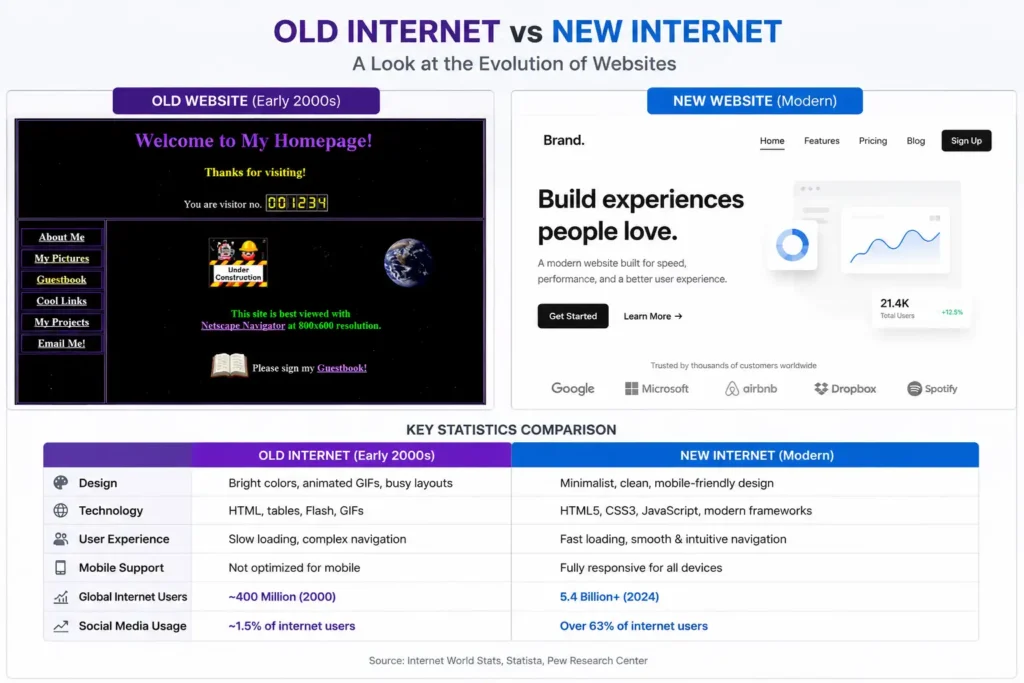
The rise of smartphones, social media platforms, and recommendation algorithms became the center of online activity. During the early web era, users often explored random websites through search engines, blog links, and online forums. Today, personalized feeds and algorithms now control much of the content users see online.
As platforms like Facebook, YouTube, TikTok, and Reddit grew larger, users slowly stopped building standalone websites and moved into centralized ecosystems instead. This shift completely transformed how the internet changed from personal websites to social media platforms.
The rise of mobile-first browsing also changed web design forever. Older websites were often experimental, colorful, and highly customized, while modern websites focus on speed, responsive layouts, minimal interfaces, and user retention. Terms like algorithm-driven feeds, mobile-first design, centralized platforms, and digital ecosystems now define the modern internet experience.
Researchers and digital culture experts have increasingly discussed how centralized platforms influence their online behavior, discovery, and creativity. Reports published by Statista continue showing the rapid growth of social media usage worldwide. This ongoing shift has become one of the biggest reasons why many users still miss the freedom and exploration of the early internet browsing experience before algorithms took over.
What We Lost When the Web Changed
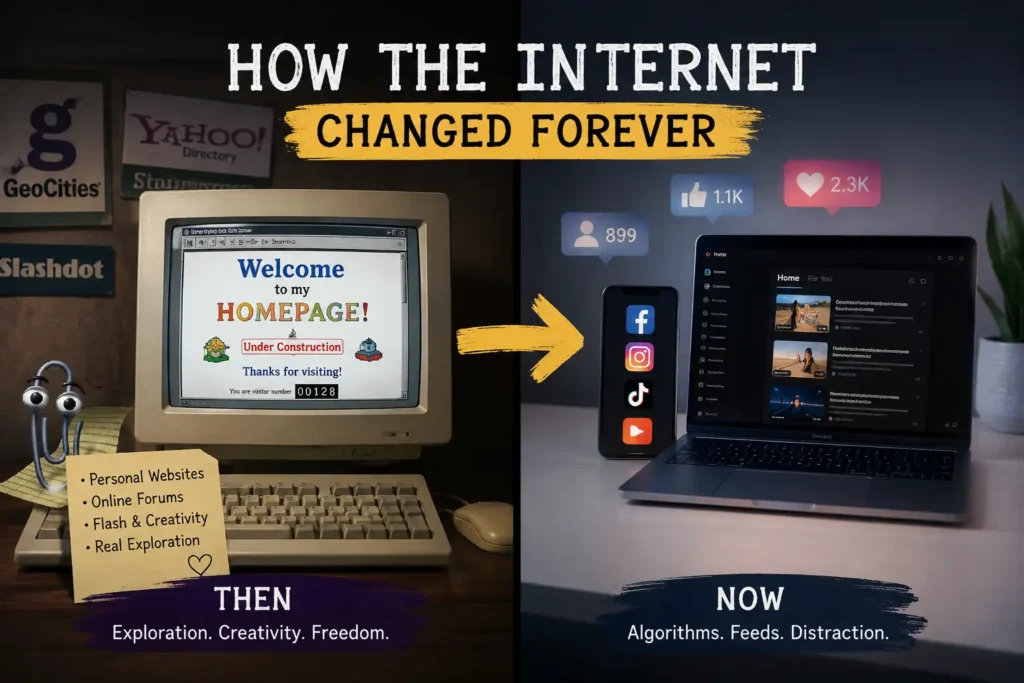
The modern internet is faster, cleaner, and more connected than ever before, but many users still feel that something has disappeared along the way. Early websites often felt personal because they reflected the personality of the people who created them. From strange homepage designs and niche forums to random Flash experiments and fan pages, the old web encouraged creativity without worrying too much about algorithms, engagement metrics, or optimization.
Instead of finding random websites through curiosity and exploration, users now spend most of their time inside centralized apps controlled by recommendation systems. The internet has become more convenient, but it has also become more repetitive. Many of the weird, experimental, and deeply personal parts of the web were gradually replaced by polished feeds designed to maximize attention and retention. This shift completely changed the feeling of the early internet browsing experience and reduced the number of independent websites from the 2000s.
Even today, nostalgia for the web continues growing among developers, designers, artists, and longtime internet users. Many people still miss the slower and more experimental atmosphere of the early internet because it felt more human, independent, and more open to creativity. The growing interest in internet nostalgia, independent and open to creativity. The interest in internet nostalgia websites, forgotten corners of the early web, and websites from the early 2000s shows that people are not only remembering old websites, but also remembering how different the internet once felt.
Frequently Asked Questions
What are forgotten websites?
Forgotten websites are old web pages, forums, Flash games, and online communities that disappeared when the new technology evolved.
Can you still visit old internet websites?
Yes, some old can still visit through the Wayback Machine. These archives preserve snapshots of websites from different time periods.
Why did so many old websites disappear?
Many early websites disappeared because of outdated technologies, expired domains, platforms shutdown, and the rise of social media platforms.
Why do people miss the old internet?
Many users feel the old internet was more creative, personal, and unpredictable compared to today’s algorithm-driven web.

Asif BC is a web developer with 2 years of professional experience in website development and modern web technologies. As the creator of Curiouxify, he researches and writes about interactive websites, internet history, browser experiments, digital culture, and the evolution of the web. His articles combine technical knowledge with careful research to document the creative and lesser-known corners of the internet.