

Some websites no longer feel like normal webpages. The moment you enter them, it feels more like stepping into a small interactive game than simply scrolling through content. They explore, interact, and move through environments. These 3D websites, which feel like games, utilise real-time rendering and depth to create immersive interactions rather than traditional browsing. If you’ve already explored some weird websites that never end, you will notice a pattern where continuous interaction keeps you engaged without clear stopping points.
Table of Contents
What Makes These 3D Websites Feel Like Games
First thing you’ll notice whats main difference between traditional websites and immersive 3D websites is interaction. Instead of reading content linearly, users engage with any 3D effects, motions, and feedback. These experiences are powered by WebGL technology in websites, which allows rendering of 3D graphics in the browser without any major plugins.
From what I’ve observed while exploring these sites, the first thing is how natural the movement feels. You’re not clicking through pages, you’re navigating through space. This is where real-time interaction on websites becomes important.
If you’ve seen some strange websites that will confuse you, one thing you’ll notice is that confusion often comes from breaking traditional navigation.
Advanced tools like Three.js rendering make this possible by simplifying complex 3D graphics into something that runs smoothly in modern websites. These technologies are what turn simple pages into modern web experiences.
1. Lusion Abduction Experiment
Visit: https://exp-abduction.lusion.co/
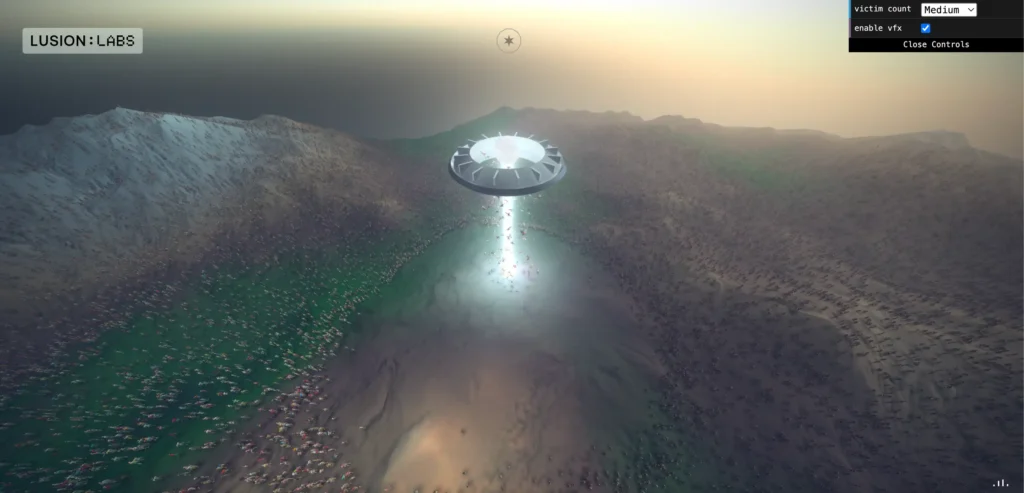
This is one of the best experimental 3D websites I’ve explored. When you enter the site, you’re immediately placed into a dynamic environment where your cursor controls a beam-like effect. There is one big UFO-style vehicle that catches every human on the ground. The interaction make very instant and the visuals respond smoothly according to our mouse reaction.
One thing I notice is that this site uses real-time 3D website principles to create motion. This is the perfect example of creative coding websites where design and interaction blend together. That lighting, motions, and responsiveness all contribute to an immersive web design experience. Must use headphones when using this site.
Why this feels addictive:
- Instant feedback from cursor movement
- Continuous motion without page breaks
- Strong sense of control
- Visual depth and smooth transitions
- Curiosity-driven exploration
2. Lusion Hair Simulation
Visit: https://hair-simulation.lusion.co/
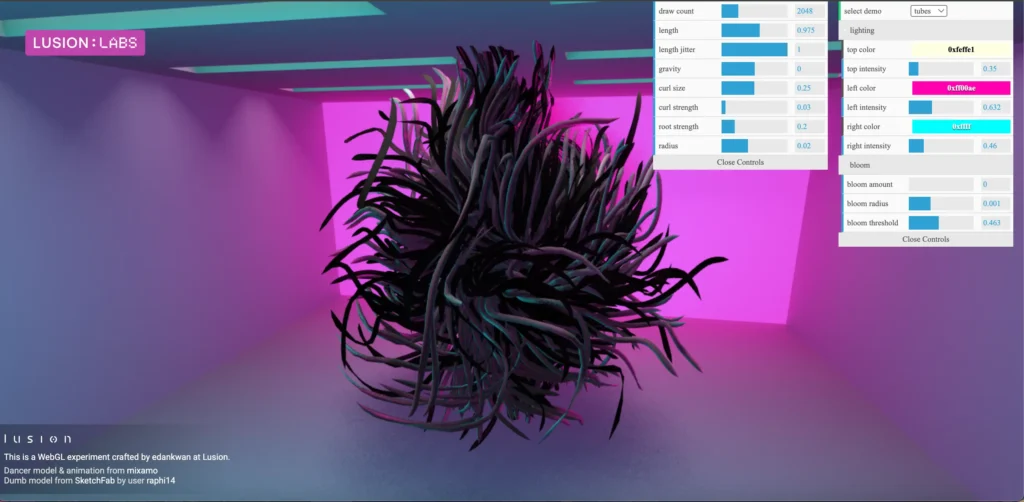
This is one of the best examples of WebGL websites when it comes to physics-based areas. Instead of just watching an animation, you directly influence how the hair strands move. As you drag your cursor, the hair changes realistically, showing how real-time interaction in websites can simulate real-world behaviour.
One thing I notice that how smooth and responsive the physics felt. There was no delay which made users so friendly and natural. This is what separates normal websites from real-time 3D websites.
This type of website is often used in interactive visual effects websites, especially in product-based companies. Even some U.S.-based creative tech companies use similar approaches to demonstrate product interaction or visual storytelling, which makes users more engaged.
If you’ve come across 3 weird websites that shouldn’t exist, you’ll notice a similar trend where they focus more on interaction than purpose.
Why this feels addictive:
- Realistic physics movement
- Smooth and fluid interaction
- Feels tactile and responsive
- Continuous feedback loop
- Encourages repeated interaction
3. Utsubo 2024 Experience
Visit: https://2024.utsubo.com/
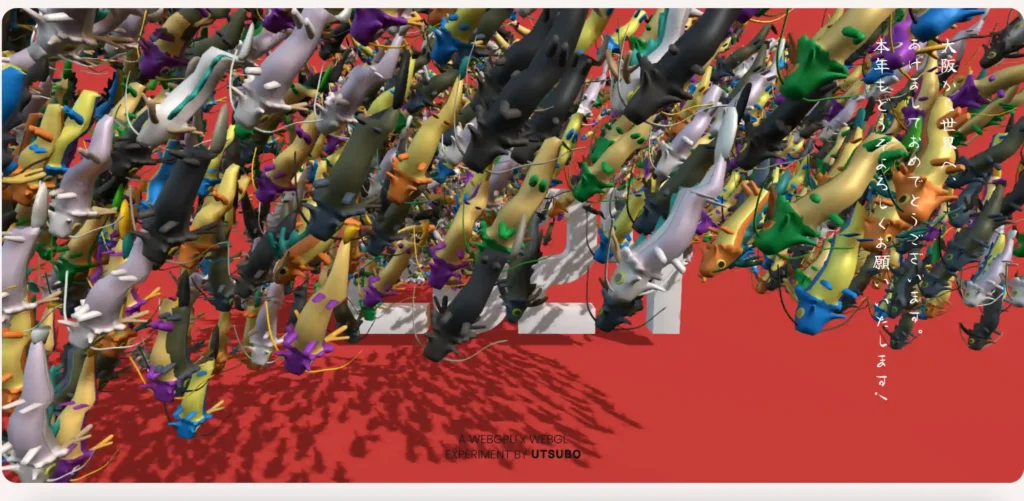
This site represents a more abstract side of experimental 3D websites. Actually, its an 2024 based website, but when you move through a dynamic environment that reacts unpredictably. At first, we can’t understand anything and are so confused, but after some moments, it becomes engaging in a unique way.
It’s a great example of websites with depth and motion, where interaction replaces traditional layout. While navigating, I noticed that the lack of structure actually increases engagement. You will be addicted without even knowing it. This is a common trait in creative coding websites, where curiosity drives the experience. And when you using this website, I recommend you to click on that fish type thing, then you hear a funny voice.
This behaviour is also seen in many unusual, weird websites explained, where the goal isn’t clarity but engagement through unexpected interaction. The smooth rendering and transitions show how well 3D graphics in the browser can be implemented when combined with modern tools.
Why this feels addictive:
- Unpredictable interaction flow
- No fixed navigation
- Constant discovery
- Abstract visual feedback
- Encourages exploration
Why 3D Websites Are Becoming Popular
One thing I noticed is that the rise of immersive 3D websites is driven by user engagement. We all know that traditional websites focus on delivering information, but these experiences focus on interaction. This shift is why more designers are adopting advanced web design techniques.
These are not just trends; they represent the future of modern web experiences, where design and interaction work together to create something memorable.
How These 3D Websites Work
Most of these experiences rely on advanced WebGL technology in websites, which allows the browser to render 3D graphics using the device’s GPU. This makes it possible to create browser-based 3D websites that feel responsive and smooth.
Newest libraries like Three.js 3D rendering simplify the process, allowing developers to build complex scenes without starting from scratch. The key element is real-time interaction in websites, where every action instantly updates the visuals.
FAQ
What are 3D websites that feel like games?
They are websites that use real-time rendering and interaction to create experiences similar to games.
What technology is used?
Mainly WebGL technology in websites and Three.js 3D rendering.
Why are they engaging?
Because of real-time feedback, motion, and depth.

Asif BC is a web developer with 2 years of professional experience in website development and modern web technologies. As the creator of Curiouxify, he researches and writes about interactive websites, internet history, browser experiments, digital culture, and the evolution of the web. His articles combine technical knowledge with careful research to document the creative and lesser-known corners of the internet.