
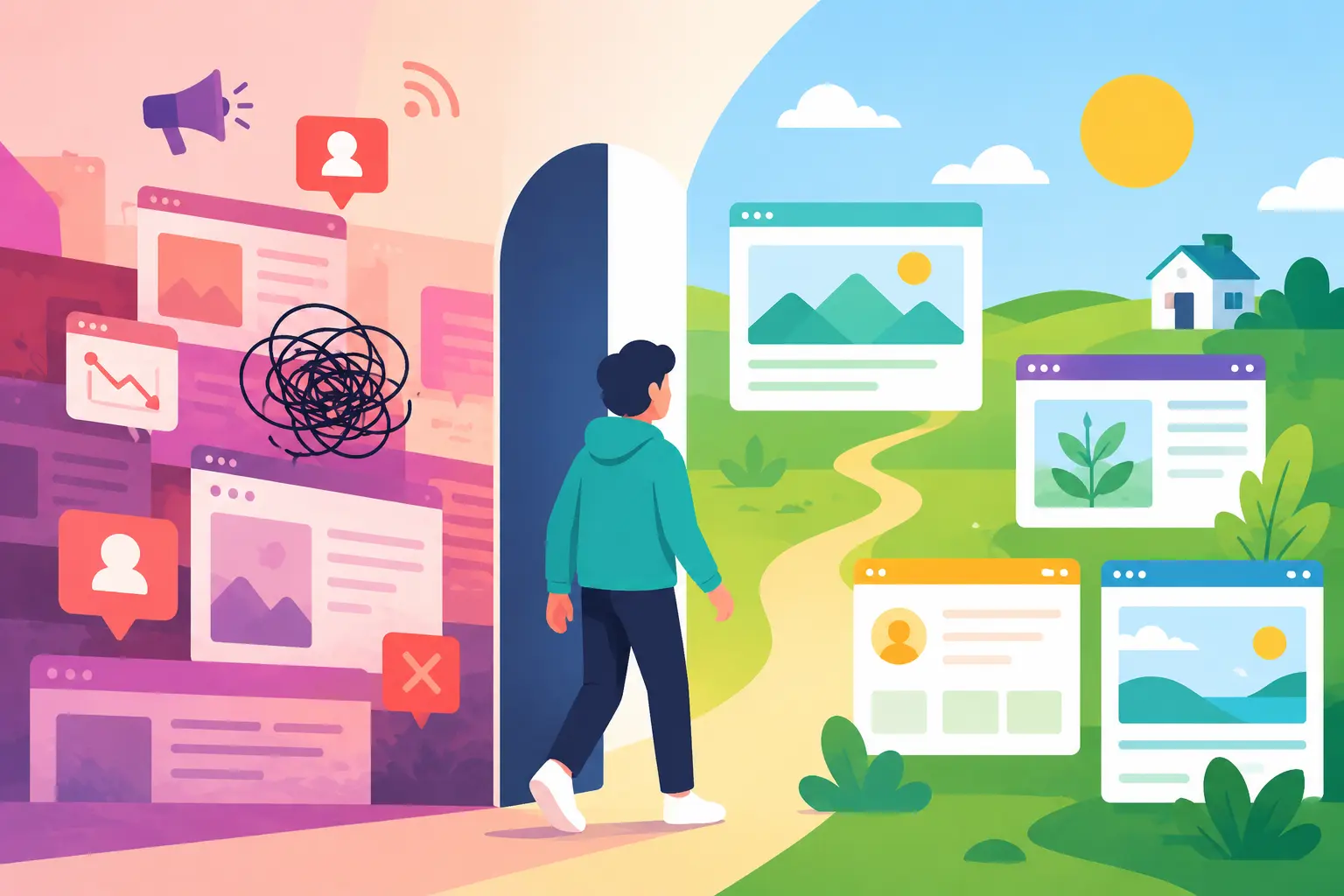
The indie web revival is happening because people are tired of renting space on someone else’s servers. Platform reach collapsed, the arrival of AI, and the generation that watched GeoCities, Google+, and Vine disappear finally understood the lesson: if you don’t own the domain, you don’t own anything. So they started building again.
While running our website and tracking this shift, which is built entirely around finding the weird, human corners of the internet world. One thing I noticed is that this isn’t a trend. It’s a correction.
Table of Contents
The Platform Bargain Nobody Read Carefully
Social media offered a deal that seemed reasonable for most of the 2010s, when I was in that age, skip the entire website setup, build an audience, and publish anything you want. The fine print said your reach would be controlled by their algorithm, and your 10 years of valuable posts would vanish if they changed the policy.
People are reading that fine print now.
Web nostalgia for the early internet isn’t really about blinking text or tiled backgrounds, although you can still find those on Neocities today. It’s about what those old school websites actually represented: The logic is simple; no algorithm could make it invisible on a Monday.
Cameron’s World is the best example of the clearest illustration of what that era was and what we lost. Built by American-based developer Cameron Askin from thousands of salvaged GeoCities pages, it looks exactly like the websites that look like 1990s internet that people are now building on purpose. Visiting these websites helps you understand the revival. at a gut level. What websites with an old internet aesthetic are reaching for isn’t retro kitsch. It’s a clear example of a real person who made something.
After years of curating sites like this, the pattern is obvious: people don’t miss the aesthetics. They miss the real ownership.
What the Small Web Actually Is
The small web is the collection of personal, independent websites built by one person or a small group of people, existing outside corporate platforms. There are no ads, no engagement metrics, no pressure to post correctly on the platform. The Indieweb community was founded in 2010 through open standards, so every personal site can communicate without a central platform. The logic is simple: Your domain is your identity, your content belongs to you.
Websites from the small web tend to share a few qualities. They link outward generously. They update slowly and deliberately. They feel like visiting someone’s actual space, not scrolling a feed. You don’t need to follow those standards to join the movement. You just need to decide to own something instead of renting it.
Why Right Now
Three things came together at once.
1. Algorithm fatigue.
Once organic reach for independent creators on major platforms collapses. People who’d spent years building audiences found their posts shown to fewer than 100 without paying to boost them. Creators I’ve spoken with across different topics report the same thing: the platform kept the audience and handed back nothing.
2. The AI content flood.
When the internet is flooded with AI-generated content, human voices get harder to find. Searches for how to find interesting personal websites, the best personal website to explore, and how to find indie websites spike alongside this shift.
3. Platform rot.
Arrival of policies. A generation that watched platforms disappear understood that nothing built on someone else’s infrastructure is permanent.
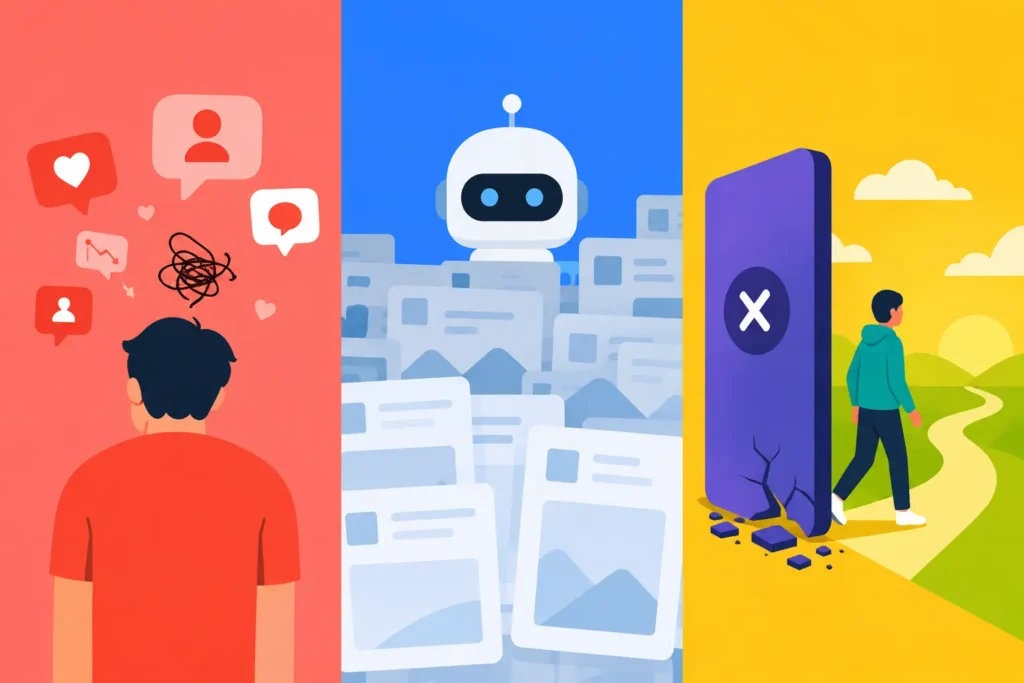
Audiences vs. Communities: The Distinction Most Articles Miss
An audience is a group of people who watch you, and the community is a group of people who know each other. Social media is too good for building the first. They’re not designed for the second.
Indie websites worth exploring are built around real interests. They often maintain blogrolls, linking to other sites they actually read. They join webrings, chains of sites that share a theme and link to one another. They link outward freely, which the social media era has trained people not to do.
Browsing the small web feels less like endlessly scrolling and more like walking through a neighborhood. You follow a link, end up somewhere unexpected, and find yourself an hour later reading someone’s meticulous notes on 1970s typography. The one thing I notice is that nobody pushed that on you; you wandered there.
That experience has largely disappeared from today’s algorithm-driven internet. I built Curiouxify specifically because that wandering feeling deserved a dedicated space. As a website developer, finding these interactive websites, weird corners of the internet, and internet nostalgia, without an algorithm deciding what you see next.
The Three Webs: A Framework Worth Keeping
Here’s something no competing article has named clearly.
There are three versions of the web that people move between:
1. The Corporate Web
It is optimized for engagement and retention. Content is a vehicle for keeping you on the platform, and discovery is controlled.
2. The Search Web
It is transactional. You visit, get an answer, leave. Useful but impersonal.
3. The Personal Web
It is organized around people sharing their interests and thoughts. When you visit someone’s personal website, you’re not consuming content: you’re checking in with someone.
The indie web revival is people migrating back toward the third web after a decade in the first. The tools are genuinely easier. A domain costs as little as $12 per year. One of the websites I got from the internet is Bear Blog, and the interesting thing is that It lets you publish without writing a single line of code.
And the community, scattered and decentralized as it is, has enough structure that finding good websites from the small web is no longer completely random. One search engine that’s different from Google is Marginalia, and it was built specifically for the small web. It’s the best answer to how to find interesting personal websites that currently exists.
Conclusion
People who are building handmade HTML websites, tending digital gardens, experimenting with net art and retro internet websites are not trying to recreate the website that looks like 1997. They’re trying to own something. They want to be discoverable on their own terms. To connect with actual people rather than optimize for impressions.
The web is always at its best when it is weird, personal, and made by people for each other. That web is still out there. It’s just not where the algorithm wants you to look.

Asif BC is a web developer with 2 years of professional experience in website development and modern web technologies. As the creator of Curiouxify, he researches and writes about interactive websites, internet history, browser experiments, digital culture, and the evolution of the web. His articles combine technical knowledge with careful research to document the creative and lesser-known corners of the internet.