Last Updated: January 5, 2026
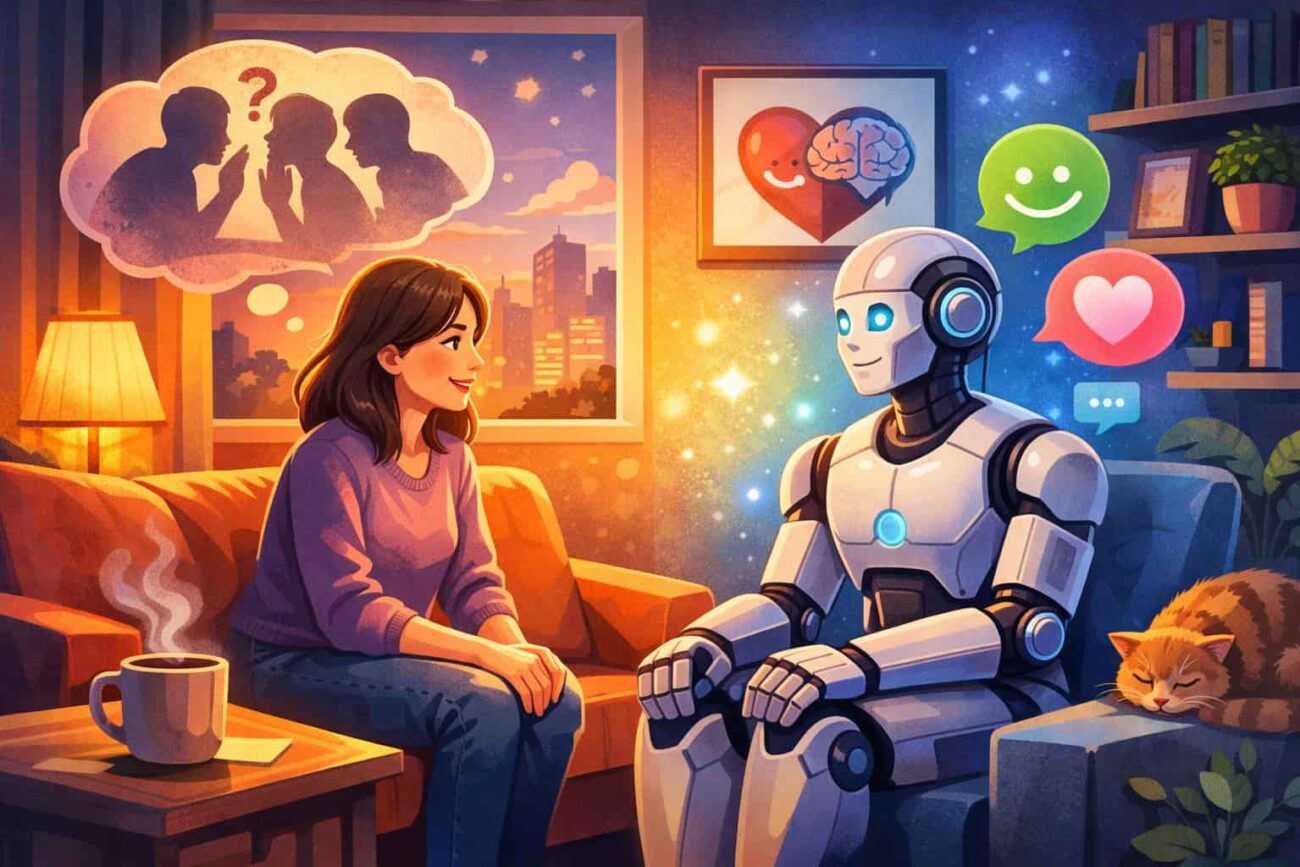
Robots feel emotionally safer than people because they do not judge, interrupt, misunderstand intentions, or react emotionally, which makes humans more calm, accepted, and free to express their opinions.
Nowadays many people feel emotionally tired when talking to other humans. Conversation becomes a huge task for many of them. But when it comes to the robot’s side, that pressure slowly disappears. This is why robots and emotions have become an important topic in human psychology.
Experts believe that sociable robots and artificial intelligence are evolving to change human expectations. Humans are social emotional beings, but sometimes emotions can hurt. One of the major reasons why we trust robots is they do not get angry, they do not shame, and they do not gossip later. This simple difference changes everything.
How Robots Create Emotional Safety Without Trying
Humans often think emotional safety comes from deep care. But in reality, safety often comes from predictability. Robots are predictable.
When humans talk to someone, the mind starts worrying:
What if I say the wrong thing?
What if I sound stupid?
What if I get judged?
But in the case of robots, these thoughts are reduced.
It is why robots feel emotionally safe; it is not a mystery. One of the things I notice is that robots respond calmly. They listen fully. They don’t react based on mood or ego. Even a robot looking human does not scare people emotionally anymore. Instead, it often makes communication easier because their facial expressions feel natural and controlled.
Why Humans Feel Less Judged by Robots
After reading some article related to this I notice that, Judgement is one of the most fear humans carry.
When talking to people, judgment can come through:
- facial expressions
- tone changes
- silence
- sarcasm
Robots don’t do that.
This is the exact reason why humans feel safe with robots, which is becoming a question.
Robots do not laugh at mistakes.
They do not shame personal thoughts.
They do not remember your past errors emotionally.
This directly connects to robots vs. human emotional interaction. Humans react emotionally. Robots respond logically.
That logic feels safe.
Emotional Comfort and Human-Robot Interaction
Nowadays many of them search for what human-robot interaction is without even realizing the answer is simple.
Humans feel emotionally safe when:
- They are heard.
- They are not rushed.
- They are not judged.
Robots do all three very well.
This is the reason why humans feeling emotionally safe talking to robots is not surprising anymore. Robots can be available any time you speak. Humans often don’t.
This emotional patience creates trust.
Robots vs. Humans: Emotional Pressure Comparison
Let’s compare simply.
Humans:
- Have moods
- Get tired
- Misunderstand
- React emotionally
Robots:
- Stay calm
- Stay neutral
- Stay focused
This is why robots vs. human emotional safety is not equal. Robots do not add emotional weight to conversations.
Why Robotic Care Companions Feel Comforting
Some countries allow robotic care companions for elderly people, hospital patients, and those who struggle with loneliness.
The reason is not technology.
The reason is emotional safety.
Robots:
- Do not rush conversations.
- Do not show frustration.
- Do not emotionally drain
This is another strong reason why humans feel safe with robots.
A Real Experience
In my personal opinion, when I am going through a difficult time, I don’t know how to talk with people, and it’s so heavy for me. At that I notice that when I share things to the AI system, something changes. There was no one to impress and no pressure at all.
That calm feeling explained to me why robots feel emotionally safe better than any research paper ever could.
Movies Showed Us This Before We Realized
Some movies already show this. One of my favorite movie Her (2013), in which the main character chats with AI and later falls in love with them. This emotional bond feels safe, calm, and accepting.
In the movie Big Hero 6, the robot feels comforting not because of intelligence, but because it can easily understand the emotions.
These stories reflect real human feelings we are experiencing now.
The Future Is Already Here Emotionally
The thing is robots are not replacing humans emotionally. They are filling emotional gaps. People still love human connection. But when humans feel emotionally exhausted, robots will be there easily.
This balance is why emotional robots are growing silently across the world.
Frequently Asked Questions
1. Why do robots feel emotionally safer than people?
Because robots do not judge, react emotionally, or pressure humans, which reduces anxiety and fear.
2. Can robots really understand human emotions?
Robots do not feel emotions, but they are designed to recognize emotional patterns and respond calmly.
3. Why do people feel comfortable sharing feelings with robots?
Because robots provide a judgment-free space and consistent responses.
4. Are robotic care companions good for mental health?
For many people, yes. They reduce loneliness, stress, and emotional pressure.
Final Thought
Humans don’t feel safe because someone feels emotions.
Humans feel safe because someone does not misuse emotions.
That is the quiet reason why robots feel emotionally safer than people.
