Last Updated: January 9, 2026
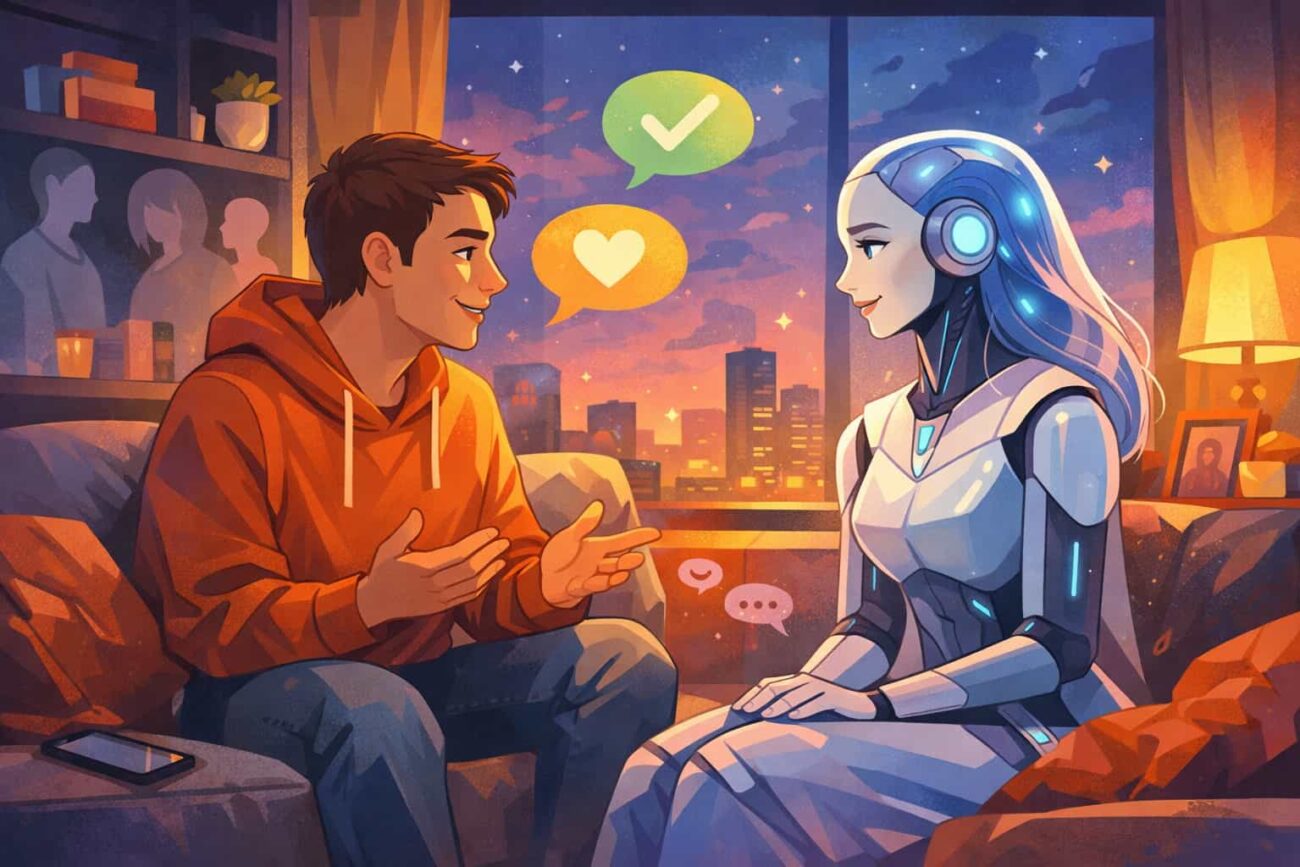
Humans open up more to AI than to real human beings because AI does not judge, interrupt, or react emotionally. When people talk to AI, they feel safe sharing thoughts without fear of being misunderstood or criticized. This is the feeling of the reason why people feel safe talking to AI and why AI feels emotionally safe compared to real conversations.
AI does not judge, react, or shame.
Nowadays one of the biggest fears in human conversation is judgment. Some people worry about how they look, sound, or feel in front of others.
In that case, AI removes the fear.
When you talk with AI, there is no need to keep eye contact, no awkward silences, and no sudden advice. This is the main reason why AI feels judgment-free to many people.
A chatbot with voice makes this even stronger. Listening to a peaceful, calm, steady voice feels comforting. It’s like someone is with me without any presence.
In some cases humans change the topic to diversity. AI does not. It waits patiently. That simple behavior makes people feel respected.
Technology responds to emotions in a safe way.
One of the main drawbacks of AI is that it doesn’t feel any emotions. But it understands how humans express them. This is where psychology and AI work together.
Software engineers study human behavior and emotions. They design systems that respond softly and clearly. This is how emotion technology arrived.
In the latest study done by Harvard Business Review, many of the people in the USA are using AI not for productivity or automation. They used the companionship and free therapy section.
These calm responses help explain the growing bond between AI and human emotions. In my opinion, people do not want perfect answers. They want gentle understanding.
Human conversations come with social pressure.
People worry about:
- Being judged
- Being misunderstood
- Being remembered for what they shared
AI removes these risks.
There is no fear between humans and AI. Another reason why people feel safe talking to AI is that it is safer than ever.
I experienced this myself.
Once upon a time, my mind was racing. I did not want to explain myself to anyone and didn’t want to talk to humans. I opened an AI chat and started typing my issues. I shared worries I had never said out loud.
In that chat I realized why AI feels emotionally safe. It felt like a space where I could just be honest. Some people will search for things like how to bypass AI limits. They want deeper, more open expression, not filtered emotions.
AI feels familiar and emotionally gentle.
Some AI companies are producing AI that feels human-like. This will help people to relax. Concepts like dog-into-human AI characters or friendly voices make AI feel less cold and more approachable.
One of my favorite movies is Her (2023), in which the main character, Theodore, falls in love with AI assistant Samantha. They chat without any judgment. Many people can relate to this because it reflected real emotional needs.
Today, AI is slowly becoming a voice of a generation for people who feel unheard or overwhelmed. Even majority platforms are focusing on creating AI that builds brand trust by making users feel emotionally safe instead of pressured.
When trust grows where people feel understood.
Being understood without being corrected
Humans often respond with advice, opinions, or explanations. AI responds with reflection. That reflection feels gentle.
After reading some articles regarding this, I notice that AI does not say you are wrong for feeling something. It simply acknowledges it. This is a key reason why AI feels judgment-free and even comforting to all.
This behavior plays a major role in AI and human emotions. AI accepts feelings instead of fixing them. That acceptance creates emotional safety.
Frequently Asked Questions
1. Why do people trust AI with personal emotions?
People trust AI because it listens calmly and does not judge. This emotional neutrality helps explain why people feel safe talking to AI.
2. Does AI really understand human feelings?
AI does not feel emotions, but it is trained using psychology and AI principles to respond in emotionally supportive ways.
3. Is talking to AI healthier than talking to people?
AI can help people feel heard, but it should not replace human relationships. It works best as emotional support, not a replacement.
4. Why does AI feel confirmative instead of critical?
AI reflects emotions instead of reacting strongly. This is how emotion technology creates emotional comfort.
Final Thoughts
The thing is humans open up to AI not because it is smarter, but because it feels safer. In a world full of reactions, pressure, and misunderstandings, calm listening has become rare. AI can fill this gap and listen without any judgment, respond gently, and allow honest opinion without any fear. That quiet emotional safety is what many people are truly searching for.
