Last Updated: December 30, 2025
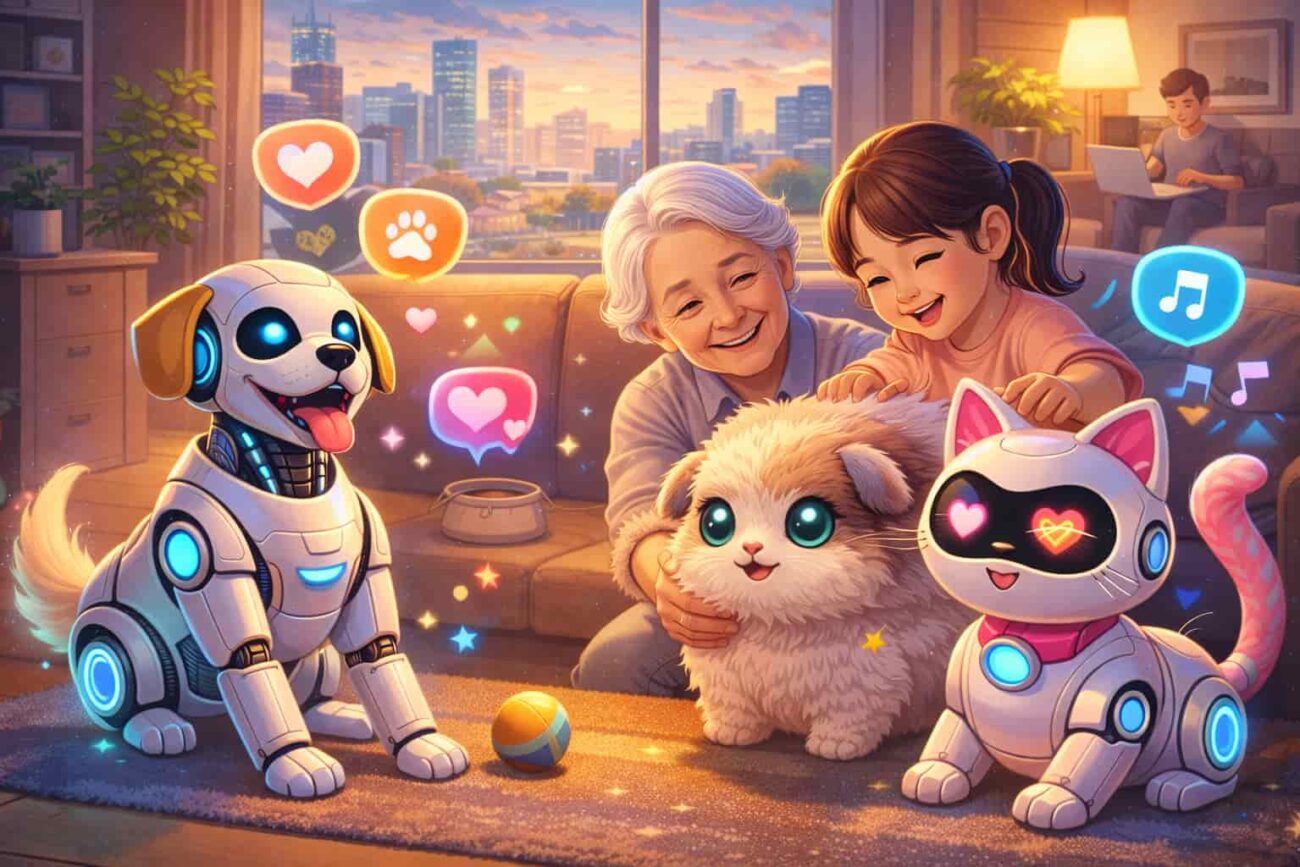
Robot pets are becoming popular because they don’t need food, cleaning, or medical care, and they can still give emotional support, entertainment, and smart interaction like a real pet. Robotic pets reduce daily stress, save time, and offer companionship without responsibilities, making them perfect for busy people, kids, and lonely people.
Studies show that people with dementia and people with loneliness are depending on robotic pets. Because they give more freedom and more availability than real animals. In Japan they introduced a robotic pet called “Moflin” developed by Casio Computer Co. Casio claims Moflin can form more than 4 million emotional profiles. According to Forbes, it sells for $429 in Japan.
What Are Robot Pets?
Basically, robot pets are artificial pets designed like real pets. They use motors, sensors, and artificial intelligence to move, respond, and show expressions. Some robotic pets look realistic, while some of them look like cartoon models. The main purpose of robotic pets is simple: to give companionship to older people, lonely people, and those who need companionship.
Common features include:
- Walk or move independently
- Respond to voice or touch
- Show emotions with lights or sounds
- Connect with apps
- Perform small actions or tricks
Why Robot Pets Are Becoming Popular
The main reason why robot pets are becoming popular is they are available 24/7. No matter day or night, they will always be companions. Robot pets remove all the difficult parts of pet care.
Reasons for rising popularity:
- No feeding
- No cleaning of litter boxes
- No barking complaints
- No hair shedding
- No allergies
- No expensive medical bills
- Safe around kids and elders
- Ready to play anytime
Futuristic Robot Dog
A futuristic robot dog may become one of the most advanced AI companions. Nowadays many companies are developing robot dogs that can balance, jump, follow commands, and navigate our rooms. In the military section they already began exercising with a robotic pet.
Future robot dogs may:
- Guard homes
- Detect danger
- Learn tricks
- Play fetch
- Respond to mood changes
- Sync with smart home devices
They may also help elderly owners by performing small tasks.
Robot Cat Cartoon Trend
The robot cat cartoon trend comes from how kids and families prefer friendly design. In my opinion cartoon-style robot cats are safer, more lovable, cuter, and easier to personalize.
Popular features include:
- Big expressive LED eyes
- Soft, colorful body
- Sweet voice responses
- Simple movement patterns
- Interactive meowing or purring
These designs strongly influence future pet robots because they create trust and emotional comfort.
AI Pet to Human Bond
The idea of an AI pet-to-human bond is becoming powerful nowadays. Humans are considering alternatives to humans to get emotionally attached and stable.
Robot pets will build stronger bonds by:
- Recognizing owners
- Following users from room to room
- Responding to sadness
- Offering playful reactions
- Adjusting behavior based on mood
Robot Peter Griffin
The keyword “robot Peter Griffin” reflects how cartoons and memes inspire robot designs. People are enjoying fun with robotic pets and character-based robotic companions.
These character-based robot pets may:
- Talk in funny voices
- Perform comedic actions
- Entertain kids
- Be used for YouTube/TikTok videos
This trend keeps robot pets enjoyable and creative.
Low-Maintenance Benefits of Robot Pets
These robot pets are popular because they require almost no care compared to real pets. Like they don’t need food, medical treatments, grooming, or cleaning, which can save both money and daily effort. These robotic pets don’t need shed and their batteries last long with simple software updates. These types of robots work indoors anytime.
Robot Pets for Mental Health
Robot pets also support mental health by offering companionship, and which can help people feel calmer in simple, everyday ways. They help to fight with loneliness, provide emotional comfort, and in the case of kids, they give something warm to connect with. Many children find it easier to communicate with robot pets because they respond calmly and consistently.
The Future of Robot Pets
In my studies, I noticed the future of robot pets is slowly becoming smarter, safer, and more realistic. As technology is increasing day by day, the robotic pets are also becoming more emotional companions. In the future, they will personalize themselves to each owner.
Future expectations:
- Fully natural movement
- Realistic expressions
- AI-driven emotions
- Smart home communication
- Affordable price
- Custom personality modes
Many people will choose robot pets because they are safe, simple, and always available.
Conclusion
Have you ever played the game Talking Tom? It’s my favorite game. In that game we can feed, play with, and even mock Tom. That was just a game that time, but in real life robot pets are shaping the future of low-maintenance companionship. They are offering emotional support, easy care, and mainly smart features. From futuristic robot dog designs to cute robot cat cartoon models. These AI-driven pets will change how people experience friendship, comfort, and daily happiness.
