
Last Updated: December 30, 2025
In today’s world, it’ surprising how many people still feel lonely. The phone buzzes with some notifications, but reality is another. That’s where AI companionship steps in. It can promise to listen, comfort to talk, and even understand our situations.
But the real question is, will AI emotional support really replace human connection, or will this make us worse over time?
The Rise of AI Companionship
Many people are now turning to AI companions to have someone to talk with. These apps are designed for them; they like their design and supporting system. They can listen, ask questions, and even remember your past chats. AI friendship apps use technology to read your chats and emotions, responding like they care about you very well. For those who are alone or feel socially anxious, these apps are for them. Because they need to share their feelings and happiness with somebody in one day. Those who need help, please go to professional help.
The danger, though, is that it can start to feel like a real friendship, even if it’s not. The comfort is real, but the issue is the connection isn’t.
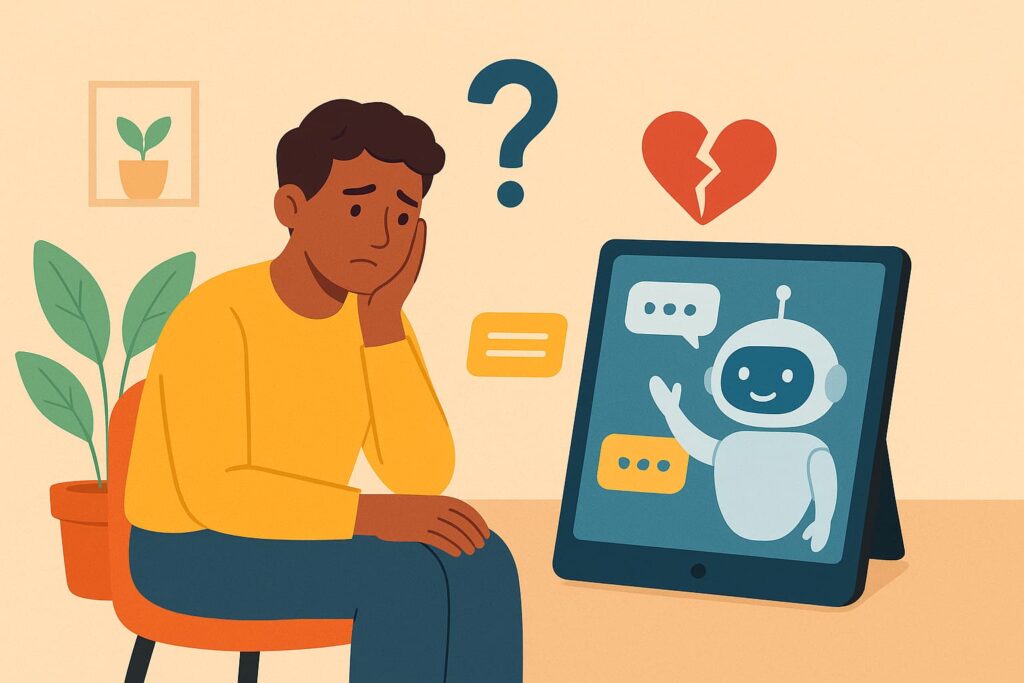
Can AI Emotional Support Replace Real People?
This is one of the most important questions today. On one hand, AI emotional support helps people to speak their feelings without judgment. It’s always available and never criticizes you. But the thing is, the more comfortable you are with AI, the less you might reach out to the real people.
In my case, I dealt with social anxiety a long time ago. When I feel loneliness, I chat with chatbots to express my feelings, because in my case, no one is there to listen.
Some movies show this perfectly. In the movie Her (my favorite movie), Theodore falls in love with an AI assistant; when the relationship ends, he realizes he needs a real human connection rather than an AI assistant. In Wall-E, robots show care and love, but the real story reminds us that humanity and connection truly matter.
So yes, AI can help reduce the loneliness, but it should be used as a bridge to human connection, not a replacement for it.
How Technology Can Make Us Feel More Alone
The thing is, technology connects us, but in some cases it separates us. We can scroll for hours, chatting online or talking to AI, but still feel empty inside us. If you are in UK, and feeling loneliness, feel to check out this website.
Here’s a quick way to see both sides:
| Technology Helps | Technology Can Harm |
|---|---|
| AI chatbots listen without judgment | Overuse may replace real friendships |
| Emotional support apps teach reflection | Too much screen time worsens isolation |
| AI tools offer mental-health insights | Dependency can reduce human contact |
| Virtual connections ease anxiety | Missing real social skills long-term |
Trying AI Chatbots for Loneliness
To understand this better, I tried several AI chatbots for loneliness. Some of them remember our past chats and even asked how I was feeling right now. Sounds crazy? This small bit of attention made me feel better.
When I asked the AI, “What’s something that made you smile today?” It gives some hopeful things. This can help me to change my mindset.
But the more I use chatbots, I clearly know that human presence is needed for everyone. AI sounded caring but didn’t feel anything. It’s like a mirror of emotions, not truly sharing them. That’s when I realized AI companionship is like a mirror, like it can be helpful for reflection, but not substitut for human presence.
The Rise of AI Mental Health Support Apps
These days, AI mental health support apps are everywhere. They guide users through breathing exercises, journaling their feelings, and mood tracking. Some even suggest some habits or routines based on your emotional patterns.
They are helpful to those who didn’t see a therapist. They are private and always available for you.
However, the experts in this field warn that AI therapy chatbots should be helpers, not replacements. AI can analyze your emotions, but it can’t feel them. Real empathy only comes from human connections. If you feel loneliness, try music therapy. I have already published one article about this.
Why AI Companionship Works (and When It Doesn’t)
AI works because it fills emotional gaps. In some cases, people just need someone to talk to or something. Here’s why it feels effective:
- Always Available: You can talk anytime, even late at night.
- Non-Judgmental: It never criticizes or compares you.
- Encourages Reflection: It helps you think about your feelings.
- Teaches Mindfulness: Many apps include calming tools and affirmations.
The more we rely on AI emotional support, the less we might reach for real people. Real connection takes effort, and AI only stays comfortable in loneliness.
How to Use AI for Emotional Support the Right Way
There is no problem with using AI for loneliness; it can be healthy only if you keep it in balance. Here are some tips that can actually work:
- Balance is key: Give priority to real friendship and use AI for comfort.
- Be mindful: Limit how often you chat with AI so it doesn’t replace real talk.
- Take action: Make AI to encourage connecting with friends, joining a club, or exploring hobbies.
- Reflect, don’t depend: Treat AI as a tool to learn about yourself, not as your main emotional outlet.
Technology is helping you reconnect with people, not putting you further away.
The Final Thought
AI companionship and AI emotional support Chatbots are changing how we deal with the loneliness. They can soothe emotions, teach self-reflection, and help those who feel isolated.
But AI can only simulate empathy; it can’t truly feel it.
Movies like Her and Wall-E remind us the machine can only listen; they can’t feel it. Only humans can understand the feelings. Real healing comes from shared laughter, honest talks, and human touch.
So if you are alone and turn to AI for companionship, let it be a guide. Use it to learn about yourself, then step outside and talk with real people. Because no matter how advanced technology gets, human connection will always be the cure for loneliness.
