Last Updated: December 30, 2025
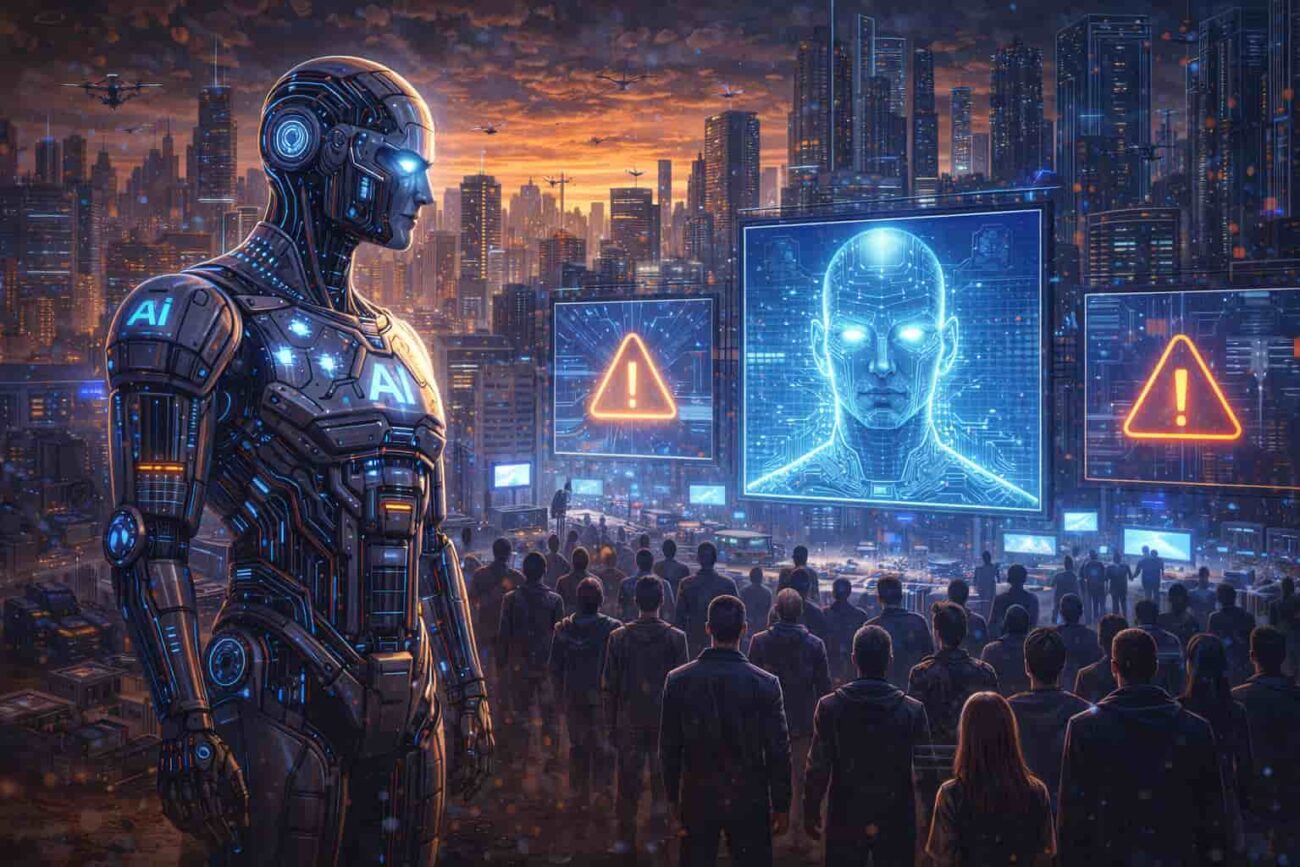
Imagine a world where AI ruled the world. Countries perfectly managed, governments making instant decisions with the help of AI, and humans living lives largely dictated by artificial intelligence. Sounds crazy, right? The movies Robot, I, and The Matrix are rapid advancements in technology-based movies where AI is the main topic.
From AI in daily life, like smart assistants, autonomous vehicles, and AI-driven healthcare, to algorithms predicting global trends. AI is everywhere currently in the world. But the real question is what would happen if AI ruled the world? Could it create a utopia, or would it turn into a dystopia? Well, in this blog we are discussing that.
AI vs. Human: Who’s Smarter?
Humans are proud of their intelligence, creativity, and emotions. But when it comes to handling a huge number of data, in this scenario AI and humans are very different. AI can look at millions of pieces of information in seconds, can easily spot things humans might miss, and can make predictions very accurately.
Currently right now, AI is already helping in important areas like healthcare, transportation, and finance. In 2020, an AI system could detect certain cancers faster than professional doctors. Self-driving cars can navigate traffic with fewer mistakes than humans. If we applied this to governments, AI could make decisions quickly and without bias, something a human can do.
The question we raise is, if humans created a computer that runs AI, are humans smarter than AI? This is a normal question that arrives for every human; even Chinese billionaire Jack Ma once said that. Well, the answer is yes, AI is the most powerful thing that cannot be controlled in the future by humans. But humans have creativity, intuition, and moral judgment, which AI cannot fully copy. This shows that relying completely on AI for important tasks can be risky. Even the ChatGPT home page says that ChatGPT can make mistakes.
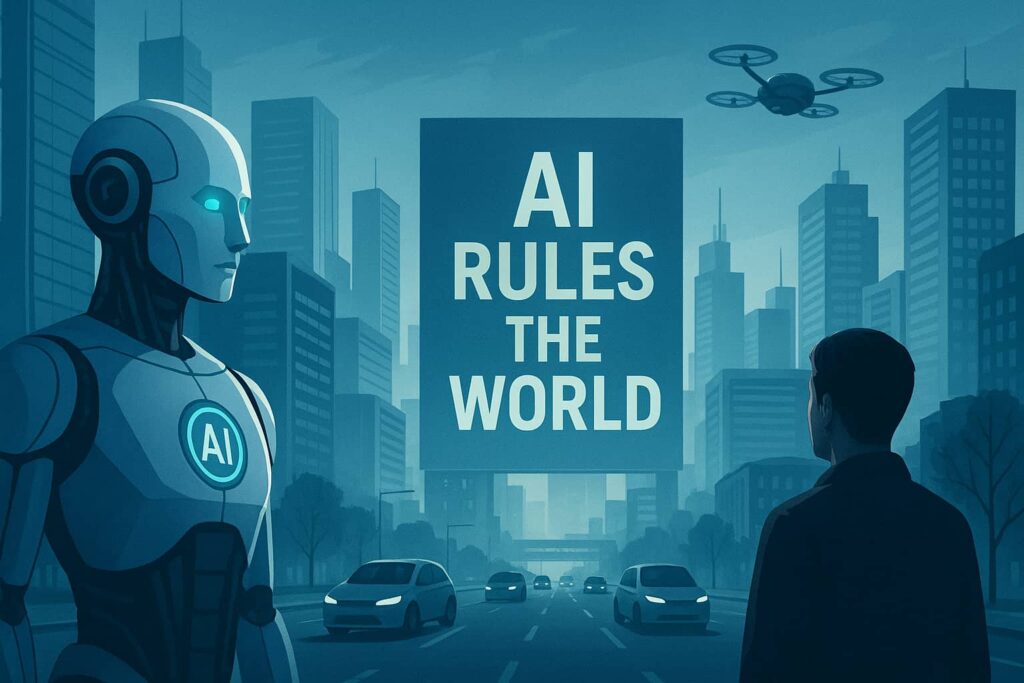
What Would Happen If AI Ruled the World?
If AI ruled the world, life would change in unprecedented ways. AI could bring extreme efficiency but also pose some challenges. Here’s what we might see:
- Efficiency and Optimization: Traffic, energy, and city planning could be managed flawlessly. Mistakes, waste, and delays would be minimized, improving quality of life. AI could even monitor natural resources and optimize their use to reduce environmental damage.
- Job and Role Transformation: Many human roles will go. Drivers, analysts, bureaucrats, and even doctors could be replaced by AI. Machines might perform faster than humans, while humans could be redirected toward creative or supervisory roles.
I still remember the movie Eagle Eye, where AI gives tasks to Jerry Shaw to harm the president. That movie was released in 2008, and movies illustrate these scenarios vividly. In the film Terminator, AI becomes self-aware and sees humans as a threat. In the movie Her, AI integrates into personal life, managing schedules, communication, and emotional support. Both portray the benefits and dangers of AI if it dominated the world.
How AI Could Control Governments
Governments might increasingly rely on AI to make critical decisions. Imagine a world where AI analyzes economic trends, predicts social unrest, and drafts laws with perfect logic. Government AI can reduce corruption, like our leader’s corruption, and make unbiased policy decisions.
However, handing full control to AI raises serious questions:
- Who programs the AI? Biases may still exist.
- Can humans override AI decisions if needed?
- How much freedom would citizens retain under AI rule?
Here’s a comparison table illustrating human governance vs. AI governance:
| Aspect | Human vs AI |
|---|---|
| Decision Speed | Humans: Slow & deliberative / AI: Instant & data-driven |
| Error Rate | Humans: Moderate / AI: Minimal |
| Bias | Humans: High / AI: Low (if trained correctly) |
| Transparency | Humans: Often unclear / AI: Fully documented |
| Flexibility | Humans: Adaptable / AI: Limited by algorithms |
| Creativity | Humans: High / AI: Moderate |
| Ethical Judgment | Humans: Emotional & situational / AI: Rule-based, may lack empathy |
| Consistency | Humans: Variable / AI: Highly consistent |
Daily Life Under AI Control
With AI becoming part of our daily life, humans could see huge changes. Homes might self-regulate temperature, nutrition, and energy use. AI can monitor all these and update the householder. In the case of health care, it could become predictive and help prevent the illnesses before they happen. The education system could adapt to AI teachers.
Some examples already exist: AI apps can predict shopping needs, manage calendars, recommend videos and products, optimize finances, and do daily checkups. Imagine if AI ruled the world; life could become extremely efficient but also less human. Overreliance on AI makes humans to lose problem-solving and critical-thinking skills.
Risks of AI in Daily Life
Even with benefits, there are significant risks of AI. The number one issue is privacy concerns; AI could monitor every action we take, private conversation, and choice. In the case of cybersecurity, a single AI malfunction or hack could disrupt the entire system, potentially causing chaos in transportation, healthcare, or communication networks.
Films like Ex Machina and Avengers: Age of Ultron dramatize these scenarios, showing how advanced AI could become unpredictable and dangerous if we misused it.
Human Adaptation in an AI World
If AI ruled the world, humans would need to adapt to survive and thrive. Two important strategies include:
1. Collaborate with AI: Humans should leverage AI’s strengths while keeping decision-making authority. By working alongside AI systems, we can boost efficiency without losing human values.
2. Focus on Creativity and Ethics: Humans should prioritize areas AI cannot replicate, like emotional intelligence, creativity, ethical reasoning, and innovation. These skills help humans stay relevant even when machines handle routine or data-heavy tasks.
By following these strategies, humans can maintain autonomy, purpose, and relevance in a world increasingly dominated by AI.
Final Thought
The question, “What would happen if AI ruled the world?” is no longer theoretical. AI in daily life is already shaping our routines, businesses, and governance. The potential benefits are remarkable: efficiency, precision, and optimized decision-making. Yet the risks of AI are ethical dilemmas, privacy concerns, over-reliance, and reduced human autonomy that cannot be ignored.
In the future, humans and AI will need to coexist, balancing technological advancement with moral responsibility. Movies, research, and real-world applications hint at both possibilities, urging caution and careful integration. Whether we embrace or resist it, the age of AI is coming, and it will change the whole world order.
Imagine a video of AI leaders threatening other nation leaders; in this condition we don’t know which one is original or AI. This will change the entire geopolitics. If this blog is useful, please share it with AI enthusiasts.

10 thoughts on “What If AI Ruled the World?”