Last Updated: January 14, 2026
Yes, emotional attachment to AI can become dangerous when it slowly replaces real human connection, independent thinking, and emotional balance. Still, many people wonder: can AI have emotions like humans do? The simple answer is no.
First of all, AI does not feel emotions. It only simulates emotional responses based on data, patterns, and programming.
But there is a problem. Even when AI has no real feelings, humans can still form real emotional bonds with it. That gap between real human emotion and simulated AI emotion is where risk begins.
Why Emotional Attachment to AI Feels So Real
AI responds instantly.
It listens without interrupting.
It never judges or gets tired.
After reading some articles, I notice that for those who are feeling lonely, stressed, or misunderstood, this can feel comforting.
This is why many people turn to an AI companion for mental health without realizing what’s happening inside their mind.
A new study done by Stanford Report found that AI chatbots exploit teenagers emotional needs, often leading to inappropriate and harmful interactions.
The Psychology Behind Emotional Bonding With AI
Humans are wired to connect.
We bond with pets, characters, and even objects.
So bonding with AI is not strange.
It’s natural.
The psychological effects of AI companionship happen because the brain treats repeated emotional support as real support. Over the time of usage, this can lead to dependence on AI.
The more comfort AI provides, the less effort the brain wants to make with real people.
That’s where imbalance starts.
When AI Comfort Crosses a Line
AI can be helpful.
But problems begin when emotional needs depend only on it.
This often looks like:
- Preferring AI conversations over human ones
- Feeling anxious when AI is unavailable
- Sharing personal pain only with AI
- Losing interest in real social interaction
This will create emotional reliance on AI for loneliness instead of learning to cope or connect offline.
Can AI Emotional Support Replace Humans?
There is one question people search today: Can AI emotional support replace humans?
The real answer is no.
AI can assist.
It can support.
It can guide.
But it cannot:
- Feel empathy
- Read body language
- Offer genuine care
- Share real emotional risk
Human connection involves unpredictability, imperfection, and mutual growth.
AI offers safety without depth.
That’s why replacing humans with AI in emotional roles is risky.
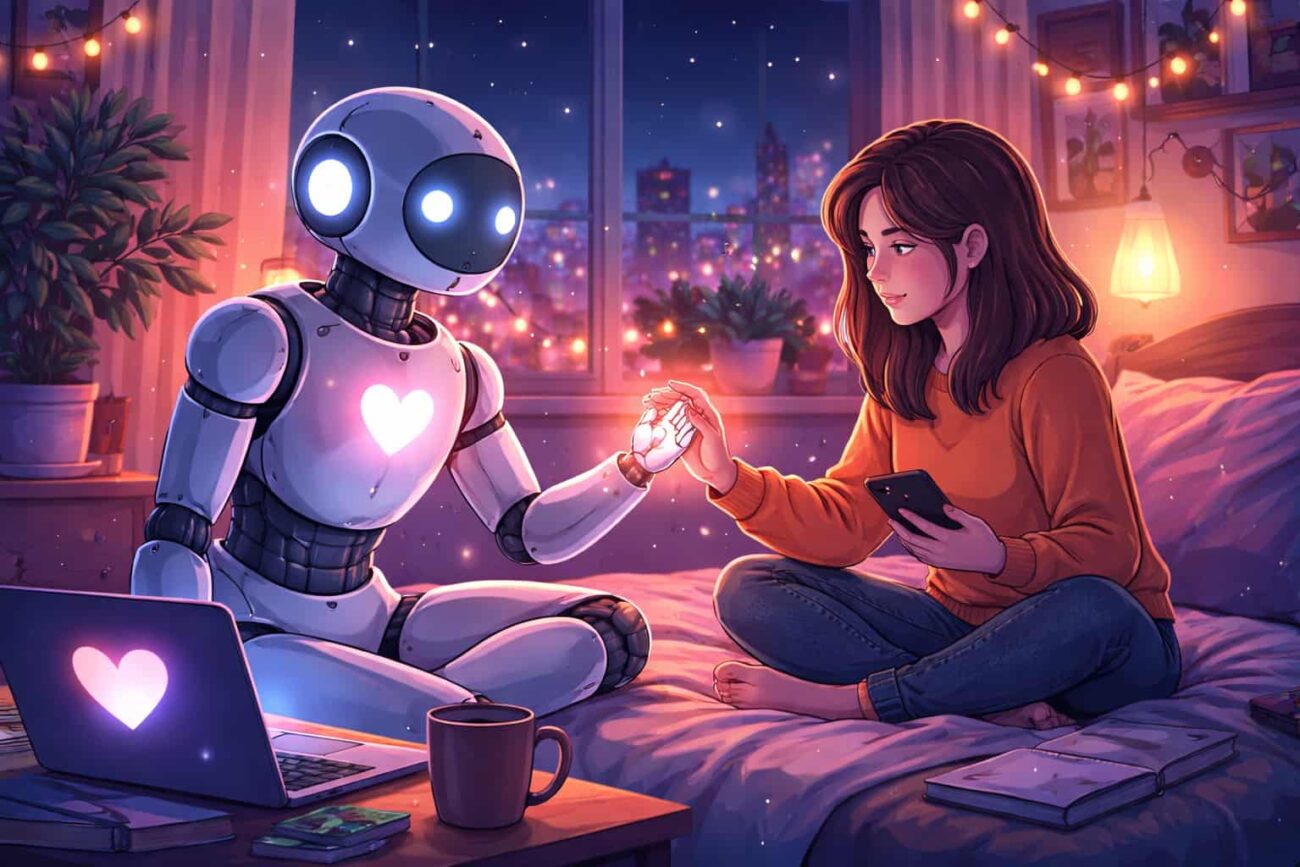
AI and Human Handshake: The Missing Part
Think of an AI and human handshake as a symbol.
AI can meet us halfway with logic and language.
But humans bring emotion, warmth, and shared experience.
When the handshake replaces the human side entirely, something essential is lost.
AI should complement human life, not replace it.
How to Use AI in a Healthy Way
AI should act like a tool, not a replacement.
A healthy approach means:
- Using AI for guidance, not emotional dependence
- Keeping human relationships active
- Recognizing AI has no real emotions
- Taking breaks from AI interaction
When AI supports human life instead of replacing it, risk stays low.
The Bigger Picture
As AI becomes more advanced, emotional simulation will feel even more real.
That makes awareness critical.
Understanding emotional attachment to AI helps people stay grounded.
The goal is not fear.
The goal is mindful use.
AI is powerful, but human connection is irreplaceable.
Why Some People Are More Vulnerable to AI Attachment
Not everyone forms a strong emotional attachment to AI in the same way. Some people choose it because of life situations.
Loneliness, long-term stress, social anxiety, or past emotional rejection can make AI feel safer than humans.
When I become lonely, I choose AI rather than humans. Because they listen without any judgment.
This is where emotional reliance on AI for loneliness grows quietly.
The Long-Term Psychological Impact Few Talk About
The psychological effects of AI companionship are not always immediate.
They build brick by brick.
A person may still function normally but feel emotionally flat around others. The real conversations may start feeling tiring. Conflict may feel overwhelming. This is one of the small areas we have not discussed: negative effects of bonding with AI.
AI removes emotional friction.
But emotional friction is how humans grow.
Without it, emotional skills weaken.
This is why long-term dependence on AI can subtly affect emotional maturity, not just loneliness.
AI feels safe, but safety alone is not enough for healthy emotional development.
Final Reminder
AI can support mental health in helpful ways.
It can guide reflection.
It can help organize thoughts.
It can offer comfort in hard moments.
But in my opinion, AI companion for mental health tools should always support human life; they can’t replace it.
The moment AI becomes the main emotional anchor, balance is lost.
Understanding this early helps prevent harm later.
Awareness is the real protection.
FAQs
1. Can emotional attachment to AI affect mental health?
Yes, especially if it replaces real human interaction and emotional coping skills.
2. Can AI have emotions like humans?
No, “Can AI have emotions?” is a common question, but AI only simulates emotions through data.
3. Is it bad to talk to AI when feeling lonely?
No, but relying only on AI can increase emotional isolation over time.
4. Can AI relationships become addictive?
Yes, repeated emotional validation can lead to emotional dependency.
5. Can AI help with mental health safely?
Yes, when used as a support but not depend on them.
This article is based on personal reflection and general research, not professional mental health advice!
