Last Updated: January 4, 2026
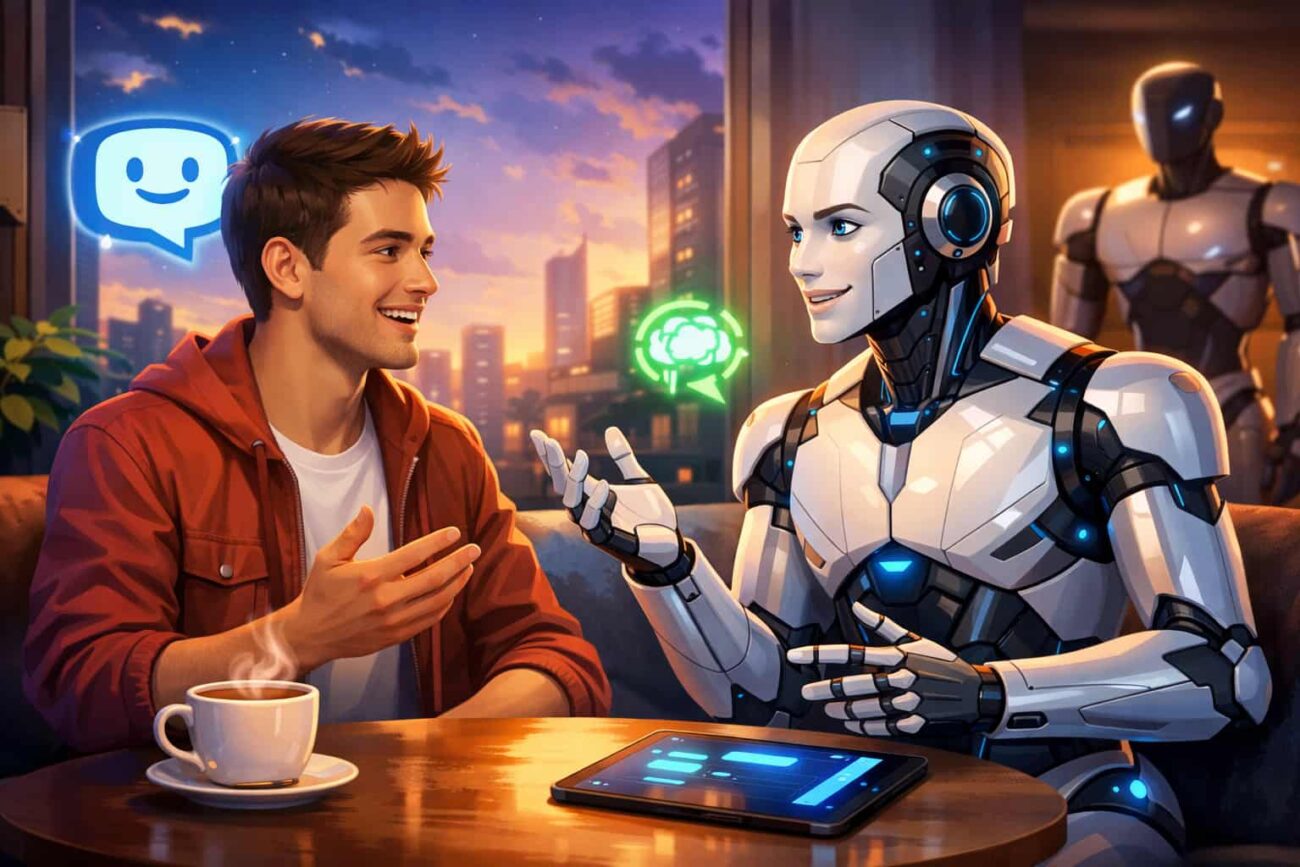
Yes, talking to a robot often feels easier than talking to humans because robots do not judge, interrupt our conversations, or misunderstand emotions the way humans sometimes do. In the first few minutes of conversation, we can feel calm and safe. This is why talking to AI, robot companionship and why talking to a robot feels easier than talking to a human are becoming popular. When we speak to a robot, we feel heard without pressure. That simple difference changes everything.
Why Humans Feel Less Pressure With Robots
When you talk to another human, your brain starts working extra hard.
We worry about how you look.
We wonder how we will be judged.
But in the case of talking to a robot, none of that happens.
Robots do not laugh at mistakes.
They do not gossip later.
They do not carry emotional baggage.
This is one of the major reasons why talking to AI feels easier for many people today. Nowadays some people are very anxious about talking with others.
What makes robots feel emotionally safe?
- They listen fully without interrupting.
- They respond calmly, even to emotional topics.
- They never shame or embarrass you.
- They stay patient no matter how long you talk.
This emotional safety is rare in human conversations today.
Robots Feel Predictable, Humans Feel Uncertain
Sometimes human conversations are unpredictable.
A joke might offend someone’s feelings.
Silence might be misunderstood.
Robots do not create that uncertainty.
Many of them search for the most realistic robot; it is not just about appearance. It is about comfort. A robot that looks human but behaves predictably feels familiar without being risky.
That predictability explains why robot conversations feel safe.
Why predictability matters
- The robot reacts the same way every time.
- No sudden emotional outbursts
- No hidden meanings in words
- No personal grudges
Your brain loves predictability because it reduces stress.
In a recent study done by Harvard Business Review in 2023, researchers reported most of them using AI robots not for productivity or automation. It’s for comfort and therapy.
Emotional Connection With Robots Is Real (Even If Robots Don’t Feel)
Some of them think emotional bonding with a machine is very strange. But the thing is simple: emotions come from humans, not robots.
We feel emotions because the robot responds in a way that feels caring.
This is the reason why emotional connection with robots is growing rapidly. Sometimes I talk to the AI late at night and share my thoughts and experiences. One reason is they never tell anyone my secrets.
Another thing is why I share my thoughts with AI because AI felt easier than explaining them to a human friend. Not because the AI understood everything perfectly, but because I did not feel judged while speaking my thoughts.
Even one of my favorite movies, Her, shows that the main character talks to an AI not because it is perfect, but because it listens without pressure.
Why emotional bonding happens
- Humans naturally attach to responsive voices.
- Being heard matters more than being understood.
- Calm replies reduce emotional overload.
- No fear of rejection
Robot Companionship Fills a Modern Emotional Gap
Modern life is fast.
People are busy.
Attention span is limited.
This is where robot companionship enters quietly.
Robot and AI companions are always available. They do not cancel plans. They do not ignore messages. They do not get tired of listening.
This becomes a comfort to talk with AI.
Sometimes the question will arise, “Can we trust AI?” Trust does not begin with intelligence. It begins with consistency. When something shows up every time, humans slowly trust it.
This is where the question, “Are humans robots?.
Nowadays humans:
- Scroll automatically
- Respond with emojis instead of emotions
- Follow routines without reflection
Meanwhile, robots are learning to sound more human.
The curiosity around whether Tesla Optimus is real is part of this shift. People are not just excited for technology. They are more curious about a future where robots live alongside us and communicate naturally.
Final Thoughts
After reading some articles related to this, I noticed that talking to a robot feels easier, not because robots are better than humans, but because they remove social pressure. They offer calm, predictable, and judgment-free interaction, which most of the people need. In a world where people are overwhelmed, rushed, and emotionally tired, they need to calm their minds.
This explains why talking to a robot feels easier than talking to humans more clearly than any technical reason ever could.
FAQ
1. Why does talking to a robot feel less stressful?
Because robots do not judge, interrupt, or react emotionally, which reduces social anxiety.
2. Is emotional connection with robots unhealthy?
Not always. It becomes unhealthy only when it fully replaces human interaction.
3. robots really understand human emotions?
They don’t feel emotions, but they are designed to respond in emotionally supportive ways.
4. Why do people trust AI so easily?
Because AI is consistent, calm, and predictable, which makes the human brain feel safe.
5. Will robots replace human conversations in the future?
No. Robots may support humans emotionally, but real human connection will always be essential.
