Last Updated: December 30, 2025
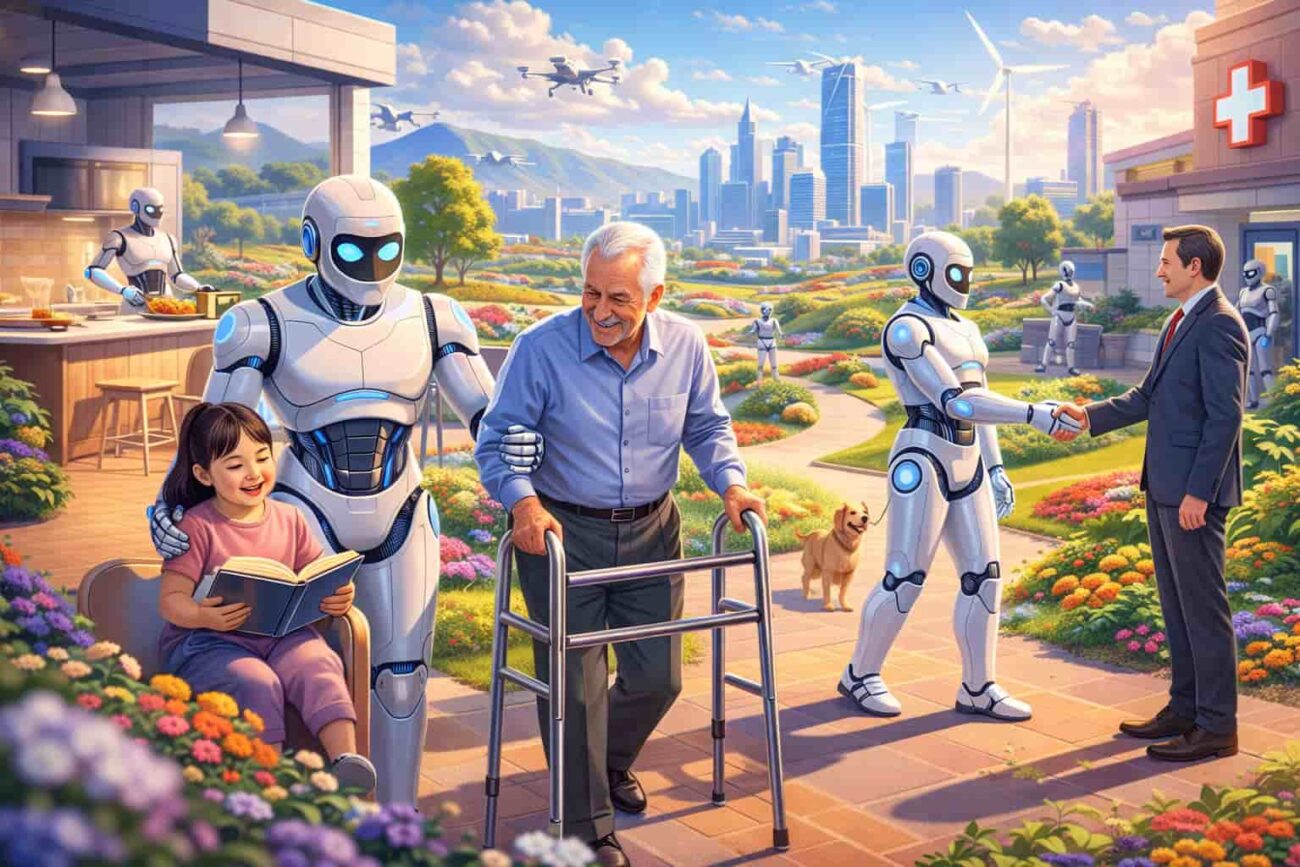
By the end of 2035, humanoid robots in the future will become common helpers in homes, offices, schools, and hospitals. They will look like exact humans, understand human emotions, and support every task we do. The arrival of the future of humanoid robots will not replace humans fully, but they will change how we work, how we learn, and how we shop and interact with technology.
In today’s technology humanoid robots are rapidly evolving because of advancements in AI, sensors, and real-world training. Companies like Tesla, especially with the humanoid robot Elon Musk project “Optimus,” are leading the current robotic revolution. These robots are built to walk, talk like humans, lift objects, assist older people, and even perform the tasks where humans get tired easily.
In the future robotics will not just be in factories anymore. The combination of robotics and humanity is shaping a world where machines support human strengths instead of replacing them. Human beings are entering an age where robots will become companions, assistants, and problem solvers.
In the future robotics will not just be in factories anymore. The combination of robotics and humanity is shaping a world where machines support human strengths instead of replacing them. Human beings are entering an age where robots will become companions, assistants, and problem solvers.
According to Morgan Stanley, the humanoid robot market cap will be $5 trillion in 2050, and billions of robots will be active in that period. China will dominate this area, according to Morgan.
What Will Future Robots Look Like in 2035?
In my opinion, we can expect robots to appear more natural and interactive and look more like humans. This is why everyone is asking how future robots will look. They will likely have soft, skin-like materials, smooth walking motion, more facial expressions, and natural gestures powered by AI.
In this area, there will be 2 types of robotic systems. First, humanoid robots in the future will be copies of human style, movements, and communication. The second thing is non-humanoid robots, which include drones, robot pets, delivery bots, and specialized work robots that don’t need human shape.
These two types will work together for humans, and it can improve our lives.
How Humanoid Robots Will Help in Daily Life
Soon humanoid robots will become part of our daily lives. The goal of the humanoid robot building today is to make a robot that can learn anything.
They will help with:
- Home chores
- Child learning
- Office automation
- Healthcare assistance
5 Ways Humanoid Robots Will Change Life by 2035
Here are five big transformations:
1. Home Support & Personal Assistants
Humanoid robots will clean, cook simple meals, manage our schedules, carry groceries, and help older-age people. They will be there as full-time helpers.
2. Workforce Efficiency
Robots won’t replace human creativity, but they will increase our productivity.
3. Education & Learning
Many schools will use robots as teaching assistants because robots are highly super intelligent and cost effective.
4. Healthcare & Therapy
Humanoid medical assistants will monitor vitals, assist doctors, and help patients walk or recover.
5. Entertainment & Companionship
Robots will entertain through dancing, singing, or storytelling. Imagine a robot companion who learns your personality.
Robotics and Humanity: Will We Live Together Smoothly?
Nowadays the rise of robots raises concern about losing jobs, safety, and emotional dependence. But after I read some articles regarding this, I thought the future looks balanced. Machines will do heavy and tiring work; that means humans have more time to create, innovate, and experience life.
The deeper connection between robotics and humanity shows that robots are not here to dominate like we saw in some Hollywood movies. People will still lead, while robots follow programmed ethical guidelines.
Some movies, like I, Robot, Ex Machina, and Eagle Eye, show both the good and bad sides of this scenario. The real future will be somewhere in the middle: robots that help us but with strong human control.
The Future Humanoid Robot Build
Robots built in the next decade will have:
- Natural facial expressions
- Self-balancing walking
- Soft-touch hands
- Real-time learning
- Cloud-connected intelligence
The humanoid robot build process is moving fast because companies test robots using billions of human movement samples. They can learn faster, adapt better, and respond according to the situations.
By 2035, your home may have a robot that cooks a small breakfast, walks your dog, teaches your son, and adjusts your home temperature based on your mood.
Will Humanoid Robots Replace Humans?
No. Robots are more powerful, but humans still lead in creativity, emotions, ethics, and complex decision-making. The goal is not competition but collaboration. The idea behind the future of humanoid robots is to remove stress from life. It can also give additional tips to improve personal growth.
Final Thoughts
By 2035, humanoid robots in the future will be part of our daily life. From Elon Musk’s Optimus to Japan’s emotional pets, we are stepping into a revolution where machines feel natural around us.
The mix of humanoid robot Elon Musk, non-humanoid robots, robotics and humanity, and the creative imagination from shows like Future Robot Daltanious all point toward the same direction.
