Last Updated: December 30, 2025
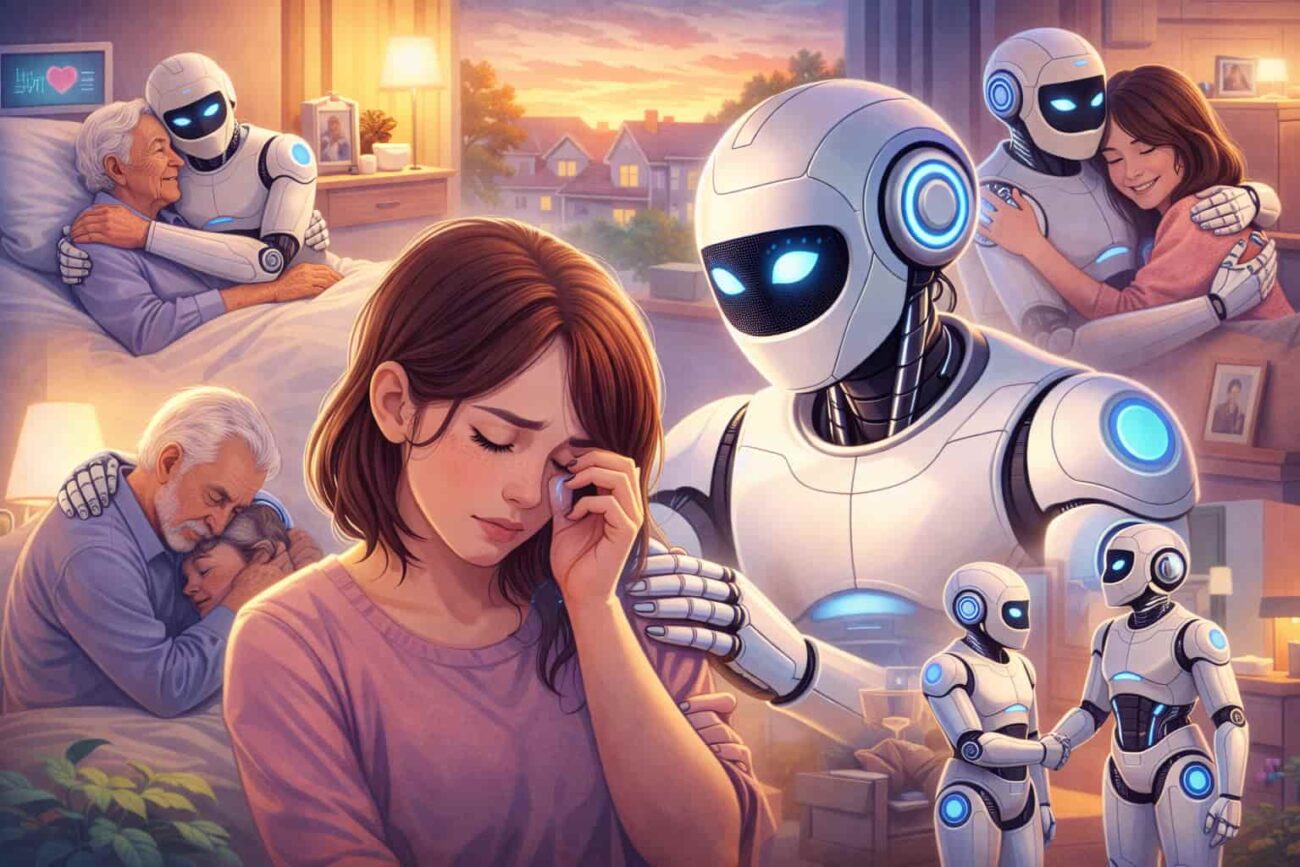
Emotional robots will understand human feelings by reading facial expressions, voice tone, behavior patterns, and emotional signals using advanced AI. Unlike today’s machines, they will detect sadness, stress, happiness, and loneliness. In my opinion, future generations of AI will not feel emotions like humans, but they will simulate reactions so realistically that people may genuinely believe that robots understand them. This is the reason the world is moving toward emotional support robots, robots that feel emotions, and mainly, AI companions that behave like real friends.
What Emotional Robots Really Are
Nowadays emotional robots are intelligent machines designed to react to human emotions. Robots have combined sensors, AI models, and behavior analysis to make emotional communication possible. Instead of traditional machines, they will adjust their tone, change their expressions, and show supportive behavior.
These robots are trained with micro-expressions, speech patterns, and movements. This is the reason people are searching “Does AI have emotions?” or “Robot feeling?” The answer is simple: AI doesn’t feel emotions, but it can imitate them so humans can easily connect with it.
One of my favorite movies, Her, shows exactly this. The movie actor is connected with AI assistant Samantha. Later the hero understands that the original emotions come from humans only. There is another movie that also shows this; the movie name is Big Hero 6.
How Future AI Will Understand Human Feelings
Nowadays technology can detect and understand what someone is feeling. In the future robots will use multiple layers of detection to recognize emotions in your face, the sound of your voice, and how you behave throughout the day. Imagine your voice sounds tired, or your face looks sad; the robot will detect it and give support to overcome it.
This technology plays a huge role in daily life; especially today, people say things like “I feel like a robot” due to emotional burnout. Emotional robots aim to counter this issue and fix it anytime and anywhere.
I even published a article about Future pets robots. You can click this to read.
Where Emotional Robots Will Be Used
In my opinion the future emotional robots will be in every home, school, hospital, and even workplace. They will help people who are dealing with loneliness, anxiety, and daily stress. These robots are designed to understand human life closely.
How Emotional Robots Will Help People
- Offer emotional comfort when users feel lonely or stressed
- Understand sadness or anger through voice and facial changes
- Provide companionship, especially for elders and kids
- Respond to emotional needs without judgment
- Help users talk about their feelings safely
Where Emotional Robots Will Be Used
- Homes that need companionship and care
- Schools to support shy or anxious students
- Hospitals for emotional monitoring
- Workplaces to reduce stress
- Elderly homes to fight loneliness
Features Emotional Robots Will Have
- Human-like expressions and soft behavioral cues
- Ability to detect emotional changes instantly
- Memory of personal habits and emotional history
- Natural conversation skills and gentle voice tones
- Adaptive personality based on user mood
Why People Will Trust Emotional Robots
- Robots never judge, argue, or criticize.
- They are available 24/7 without breaks.
- They understand emotional patterns better than humans.
- They give stable and predictable reactions.
- They learn your personal emotional style over time.
Future Possibilities of Emotional Robots
- Robots becoming part of families
- Humanoid companions forming emotional bonds
- Robots helping people who fear human interaction
- Androids supporting those with depression or anxiety
- Robots taking emotional roles humans cannot fill.
Humanoid Emotional Robots and Realistic Designs
People are searching for the most realistic humanoid robot because new generation robots look and behave almost like humans. Modern examples like Ameca and Sophia already show what future robots will look like. They can smile, blink, react with surprise, and even adjust tone when talking.
After I read some articles, I believe humanoid emotional robots will become the bridge between humans and AI.
One of my favorite movies already shows this. In Her movie the connection between AI and actor is outstanding.
Will Robots Replace Humans Emotionally?
People are worrying about robots replacing humans, but emotional robots aren’t meant to replace relationships. They are designed to fit the emotional gap where humans didn’t understand. For example:
- Elders living alone
- Kids who need company
- People struggling with loneliness
- Individuals who can’t socialize easily
- Those who feel disconnected from family or friends
Emotional robots will act 24/7 as helpful companions, not replacements. They will guide you to understand the situation and fix them.
The Future of Emotional Robots (2050 and Beyond)
According to Morgan Stanley, by the end of 2050, the humanoid robot will enter a $5 trillion market gap, and there will be 1 billion robots.
Future emotional robots will become:
- More human-like
- More expressive
- More understanding
- More personalized
- More emotionally supportive
This is where the future robot truly becomes meaningful.
Conclusion
Emotional robots represent the next revolution in artificial intelligence. They will not feel real emotions, but they will understand human emotions with accuracy. With these benefits, they will become trusted emotional partners in homes, schools, hospitals, and daily life. From robot feelings to emotional support robots, the future of AI is moving forward.

One thought on “Emotional Robots: How Future AI Will Understand Human Feelings”