Last Updated: December 30, 2025
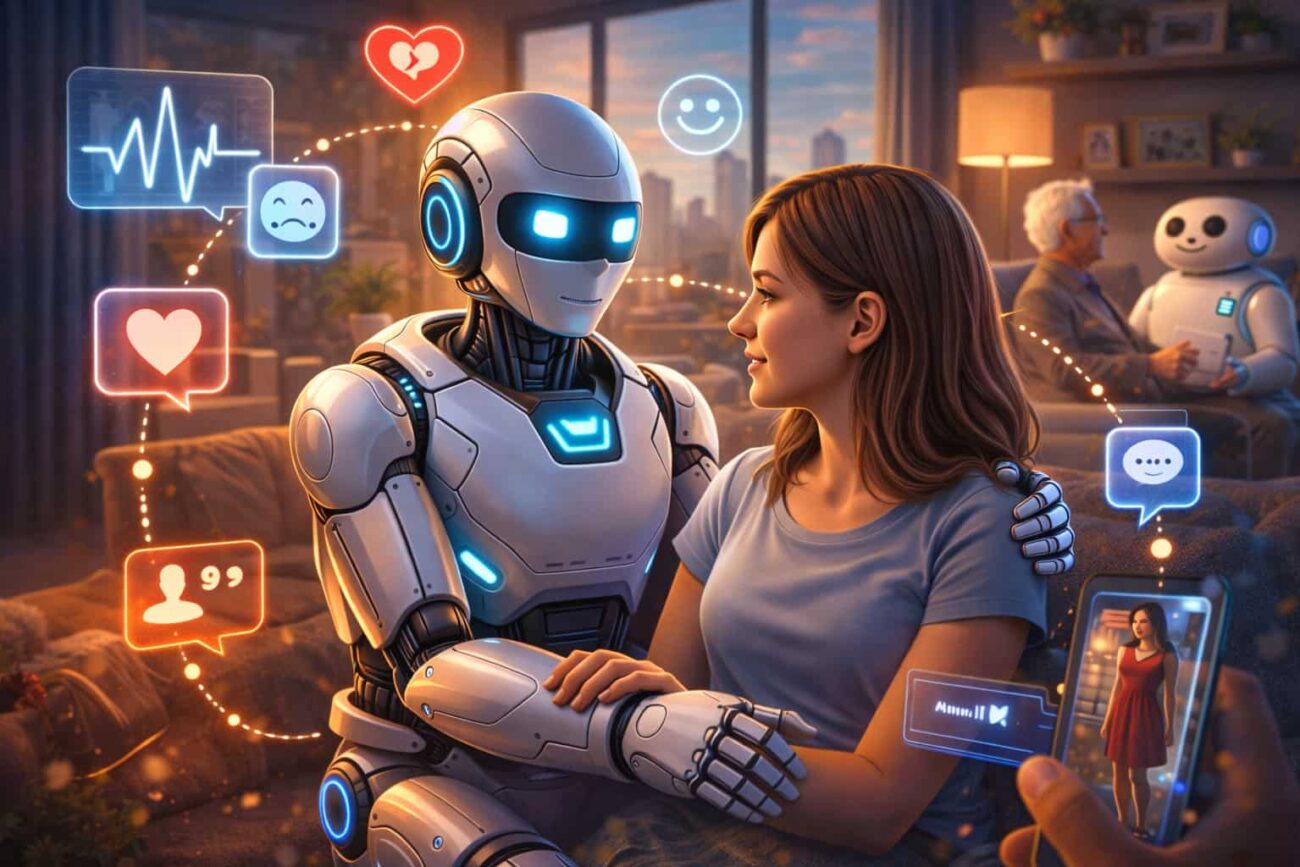
Future robots will interact with humans in a much smarter, more natural, and more emotional way than today. They won’t just follow commands; rather, they will understand our voice, feelings, habits, and body language. With future robots, robot technology, and advanced human-robot interaction, robots will talk the same way we talk to humans. These next-generation machines will communicate, help us in some situations, and they will even understand our emotions using AI.
How Future Robots Will Understand Humans Easily
Robots in the future will not be like today’s simple machines. They will use powerful AI systems that can read:
- Your facial expressions
- Your voice tone
- Your body movements
This means they will know when you are sad, happy, or stressed.
This is called future human-robot interaction, and it will be possible through new AI research.
You might have seen this idea in the movie Big Hero 6. Baymax, the friendly robot, understands the character’s pain and emotions. Future robots will behave exactly the same.
How Robots Will Talk and Communicate With Humans
In my opinion the biggest change will be communication. Future robots will talk like humans, sometimes even better than humans, because they will:
- Listen carefully
- Understand questions
- Respond naturally
- Use simple words.
- Learn your speaking style
This is what people mean when they search for how robots will communicate with people in the future.
Robots will speak multiple languages, understand accents, and reply instantly. Even I am surprised that AI is speaking my native language. I was like, “Wow.” Some robots may even use holographic displays to show the information. We saw it in the Iron Man movie.
This makes communication fast and easy for everyone, even in some cases children.
Will Robots Live With Humans in the Future?
Yes, in my opinion it is highly possible that robots will live with humans in the future.
They won’t replace humans, but they will live among us.
Robots may:
- Cook food
- Clean homes
- Help elderly people
- Teach children
- Drive cars
- Carry heavy items
- Assist in hospitals
This concern mainly focuses on people searching, “Will robots live with humans in the future?” Because it feels real and close.
The movie I, Robot showed same where robots live with humans. But at that time it was just a sci-fi movie, but now it is becoming reality as robot technology gets better each year.
How Robots Will Understand Human Emotions
Now a days robots fully understand emotions. They give emotional support, but they can’t replace human emotions. But in the future robots will use AI tools like
- Emotion sensors
- Eye-tracking
- Voice-tone detection
- Heartbeat measurement
This will help them know when someone is:
- Angry
- Sad
- Nervous
- Excited
This idea clearly matches the keyword “how robots will understand human emotions,” which is what many people want to know.
Imagine a robot asking, “You look lonely. I can help you.”
This is the future of robots that behave like humans.
How AI Robots Will Change Daily Life
In some cases, advanced AI robots will play a big role in our daily life.
They will work like smart helpers that stay with us throughout the day.
Here are some:
• They will predict your needs before you ask.
Using how AI robots will change daily life, they will learn your habits.
• They will talk to other devices.
Your robot will control your home, lights, temperature, and appliances.
• They will keep you safe.
Robots will alert you about danger, strangers, or health issues.
This sounds like a dream, but companies are already building early versions of such robots.
Future Robots in Hospitals and Schools
Hospitals will use robots for surgery, patient care, and even medicine delivery (drones). Schools will use robots to teach children through fun and interactive lessons.
These systems will be smarter than today’s machines because of future robots explained simply with AI learning.
Robots That Behave Like Humans
Future robots will act more human-like because they will use:
- Soft body movements
- Eye contact
- Emotional voice
- Friendly gestures
- Realistic expressions
This makes communication comfortable rather than scary.
One of my favorite movies “Her” showed how emotional AI can feel natural.
In real life, robots may not become romantic partners, but they can become emotional companions for people who feel lonely.
What Happens If Robots Become Dangerous?
Even though future robots will be helpful in some situations, we must also think about what happens if a robot turns against humans. Movies like Terminator and Eagle Eye show robots turning against humans. But in real life we need strict safety rules that will stop this from happening.
Engineers are already building “AI safety limits” so robots can never think of harming people, even by mistake.
Conclusion: Will Robots Interact Like Humans? Yes, very soon.
So, how will future robots interact with humans?
They will talk naturally, understand our emotions, help in daily tasks, and communicate like real people.
Robots will not replace humans, but they will make life easier, safer, and more comfortable.
The future of robots, robot technology, and future human-robot interaction is bright.
The future is exciting and robots will be a big part of it.
